Bitumen Market in Cameroon: Imports vs Exports, Ports, Packaging
Bitumen consumption in Cameroon: imports vs exports, ports, packaging, and new grades is a critical topic for understanding the country’s infrastructure, economics, and purchasing strategy. As roadworks, urbanization, and industrial investment keep rising in Cameroon, bitumen remains a vital raw material. Knowing how much is imported vs exported, through which ports it arrives, how it is packaged, and what grades are being adopted is essential for contractors, suppliers, and policy makers. This article reviews verified data for 2023, trends into 2024, and discusses the implications for the future.
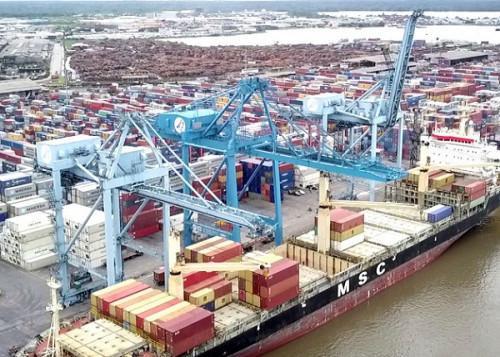
Import vs Export of Bitumen in Cameroon — 2023
Import vs export of bitumen in Cameroon — 2023 shows Cameroon was a clear net importer of petroleum bitumen. The export levels were modest by comparison, both in quantity and value.
Imports in 2023
- In 2023, Cameroon imported approximately 25,320,100 kilograms of petroleum bitumen under HS code 271320.
- The value of those imports was about USD 14,476,400.
- Major source countries included:
- Greece (~14,418,300 kg, USD 7,310,100)
- Spain (~3,607,270 kg, USD 2,063,450)
- China (~1,564,970 kg, USD 1,406,720)
- Côte d’Ivoire, United Arab Emirates, plus smaller contributions from several other nations.
These figures show that Greece was by far the largest supplier in 2023, providing more than half of Cameroon’s petroleum bitumen imports by weight and value.
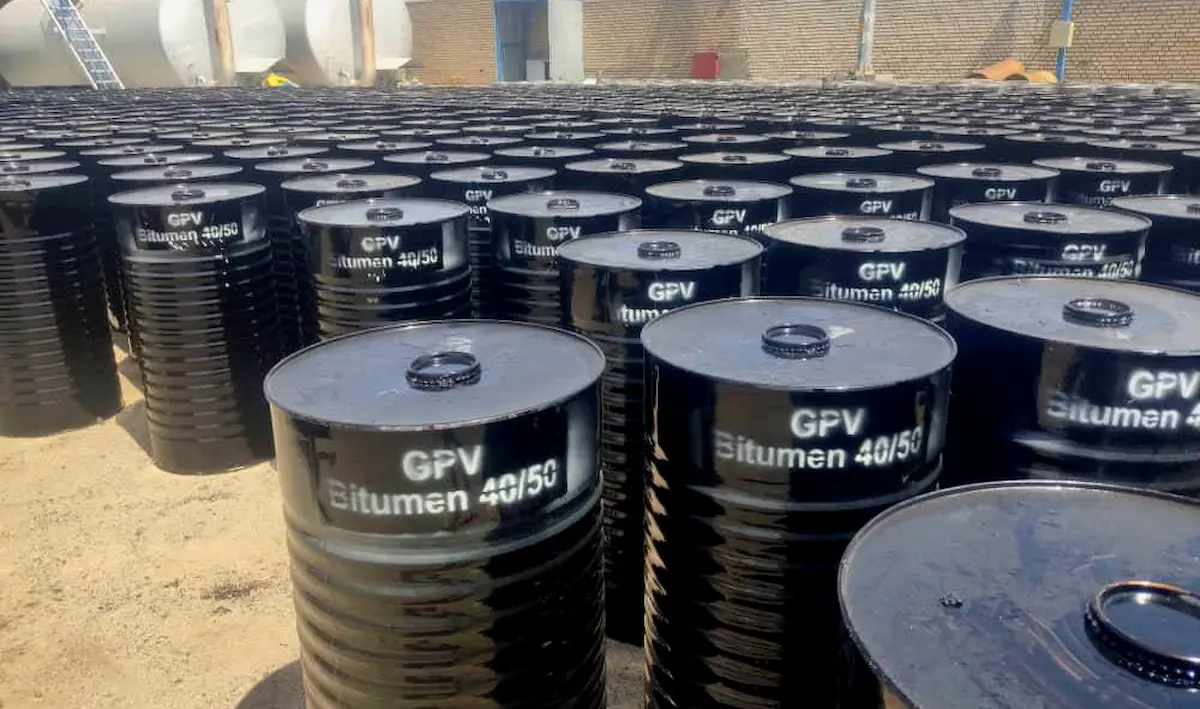
Exports in 2023
- Cameroon’s exports of petroleum bitumen in 2023 were much smaller: around 1,748,680 kilograms, with a value of about USD 1,173,970.
- The main export markets were neighboring countries, especially Chad (~1,415,730 kg) and the Central African Republic (~332,220 kg).
- Other destinations were trace amounts to Congo, France, Belgium, etc., largely negligible in comparison.
Import vs Export — Comparison and Implications
- The ratio of import quantity to export quantity is over 14 to 1 in 2023, indicating heavy reliance on foreign supply for bitumen.
- The economic value shows a similar gap: imports are roughly 12–13 times larger in dollar value than exports.
- The dependency has implications for tariffs, transport costs, and vulnerability to international price fluctuations.
Trends Toward 2024: What is Known
Data for 2024 remains limited, but several indicators reveal how Cameroon is changing its bitumen consumption, import patterns, and supply chain.
- According to Volza trade-tracking, from March 2023 to February 2024, Cameroon recorded 191 shipments of bitumen imports. This marks a slight decline (about -12%) compared to the previous 12-month period.
- The top supplier countries in that period remained similar to 2023: France, Greece, Spain amongst them.
- The number of exporting foreign entities supplying Cameroon in that period was on the order of 84 (i.e., 84 exporter companies / source countries), while buyers in Cameroon numbered about 71.
- These data suggest that although Cameroon continues to import substantial bitumen, the import volume is not growing rapidly; instead, the pattern is relatively stable or modestly declining.
Since full 2024 trade data is not yet available, exact tonnage and 2024–2023 comparisons can only be estimated from shipment records.

Main Ports in Cameroon for Bitumen Imports and Distribution
Main ports in Cameroon for bitumen imports and distribution play a central role in determining cost, turnaround time, and logistics. Cameroon has a few key seaports that serve bitumen importers, especially for large construction or infrastructure projects.
Port of Douala (Douala-Bonabéri)
- Douala is the most important and busiest port in Cameroon. It handles the majority of general cargo traffic including containers, drums, and medium parcel shipments.
- Because many roadworks and infrastructure projects are located closer to Douala (or within reach via roads), Douala often becomes the preferred port for bitumen because of shorter inland transport distances and more established handling infrastructure.
- Challenges: the access channel (Wouri River channel) needs regular maintenance (dredging), and there are congestion delays, clearance and bureaucratic delays.
Port of Kribi (Deep-Sea Port)
- Kribi is a relatively more modern facility, with deep-sea capabilities. Since 2018 it has operated and has been expanding.
- In May 2025, Kribi launched a second container terminal, which significantly increased its capacity. With the second terminal, the port authorities reported that Kribi can now handle more than 1 million TEUs per year.
- Kribi is also seeing industrial investment: a planned bitumen plant and refinery in the Kribi Industrial-Port Zone (capacity ~250,000 tons of bitumen annually) is underway, under the name All Bitumen Plc, with an investment of about 161 billion CFA francs. This suggests Kribi will increasingly serve as both an import hub and a site for local production/distribution.
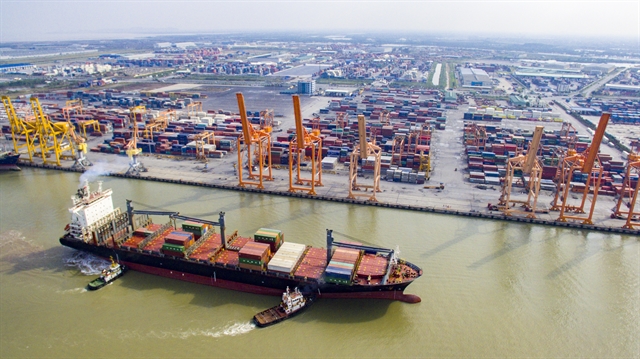
Bitumen Packaging in Cameroon
Bitumen packaging in Cameroon: packaging formats substantially affect transport cost, handling, waste, storage, and project efficiency. Cameroon follows regional packaging norms, but innovation is rising as demand for more efficient, low-cost solutions grows.
Common Packaging Types
- Steel drums (new, ≈180-200 kg capacity): These have been the traditional and most commonly used packaging for bitumen. Steel drums offer durability, handle easily, and suit small to medium projects or sites that require heating, melting, or drum-by-drum use.
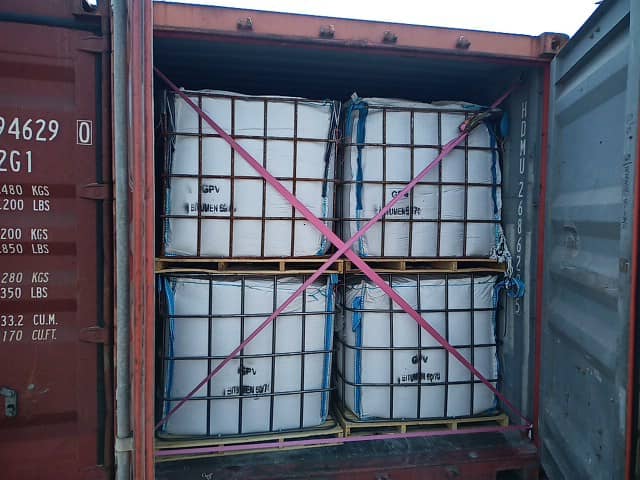
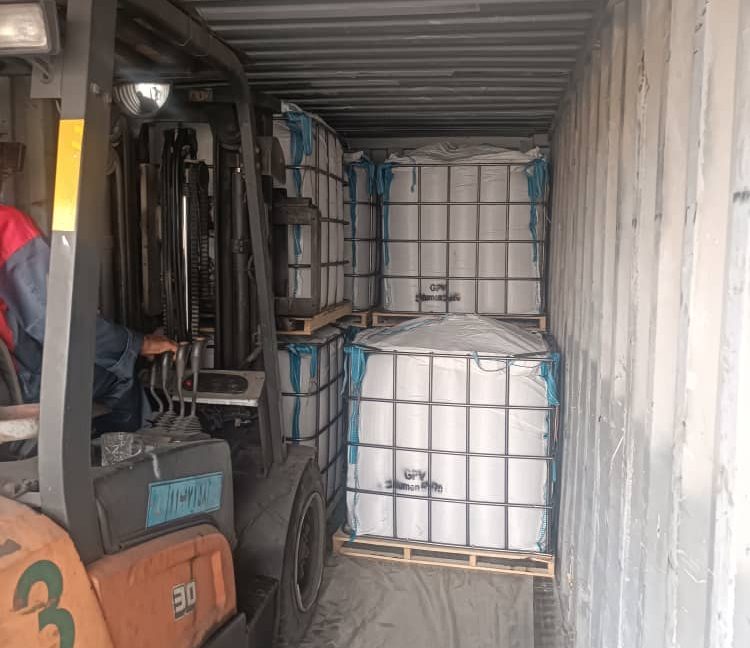
- Jumbo bags / FIBCs (Flexible Intermediate Bulk Containers): Sizes of 300 kg, 500 kg, up to 1 metric ton are used. These are increasingly popular because they reduce packaging weight per ton, improve container utilisation when shipping, reduce cost, and produce less residue/waste.
- Bulk shipments (heated tankers, heated containers, breakbulk): For very large road projects or when there is capacity at the port and end site (storage tanks, heating facilities), bulk shipment becomes more cost-effective. Bulk also reduces multiple handling, packaging waste, and per-unit cost.

Factors Driving Packaging Choice
- Project scale: small repairs vs full road construction vs highway / airport projects.
- Storage, heating, handling infrastructure: whether the contractor has drum heaters, melting plants, bitumen storage tanks etc.
- In terms of inland transport cost, drums are heavier relative to their payload due to packaging weight. However, FIBCs and bulk options are more efficient for cargo transport.
- Port handling: availability of handling equipment, capacity for heated discharge, container vs breakbulk vs drum handling.
Trends
- There is a gradual shift toward more use of FIBCs and bulk shipments in contexts where infrastructure allows.
- Suppliers are offering more packaging options to satisfy cost, waste, and environmental concerns.
- For large projects, clients are asking for performance grades of bitumen that may require stricter packaging (e.g., to avoid softening or quality loss).
Application and Adoption of New Grades of Bitumen in Cameroon
Application and adoption of new grades of bitumen in Cameroon: this is driven by climate conditions, load demands, durability concerns, and donor or international financing standards.
Polymer-Modified Bitumen (PMB) & High-Performance Grades
- Polymer-modified bitumen is being more frequently specified in major highway or infrastructure tenders. The reasons include better resistance to deformation (rutting), longer lifespan, better performance under traffic loads and weather stresses.
- High softening point / low penetration grades are becoming more common in heat-prone zones, or for roads exposed to heavy-duty use (industrial zones, port access roads).
Specifications & Contractual Requirements
- Some major government and donor-funded projects now include clauses that require bitumen to meet certain performance tests: e.g. softening point, penetration, ductility, durability.
- Contractors often demand certificates of quality from suppliers. Where possible, laboratory testing is used for verification.
Local Production & New Plants
- The investment in Kribi’s bitumen production plant (planned 250,000 tons per year) will enable local production of certain grades, possibly reducing lead times and enabling more tailored bitumen blends.
- Local production capacity, if reliable power, quality control, and infrastructure (storage, heating, distribution) are in place, could shift Cameroon from pure importer to partial self-sufficiency for standard grades, possibly generating small exports for neighboring countries.

Quantitative Comparison: 2023 vs Early-2024
Quantitative comparison: 2023 vs early 2024 shows relative stability in shipments, some fluctuation, but no dramatic growth confirmed yet.
- Imports in 2023 (25,320,100 kg) valued at ~USD 14.48 million for petroleum bitumen demonstrate the scale of import reliance.
- In the period March 2023 to February 2024, there were 191 import shipments; this number reflects perhaps a slight decline vs previous year (−12%), but exact tonnage for that period compared to full 2023 is unclear.
- No robust published data at time of writing for full-year 2024 import quantities or export changes equivalent to 2023 figures in many trade databases.
This means planning based on 2023 is more reliable; projections for 2024 should treat trends with caution.
Port Capacity, Industrial Projects, and Infrastructure Impact
Port capacity, industrial projects, and infrastructure impact directly influence how bitumen enters, is stored, and distributed within Cameroon.
- Kribi’s second container terminal (opened in 2025) significantly boosts total handling capacity, including ability to receive large vessels, more quay cranes, improved yard space. This supports larger volume imports, especially in containers or conventional bulk.
- The bitumen / refinery plant in the Kribi Industrial-Port Zone (All Bitumen Plc) is expected to have 250,000 tons annual capacity; if achieved, this could reduce dependence on imports, at least for certain grades and types.
- Storage infrastructure is still developing; many contractors still rely on imports arriving in drums or smaller parcels because large heated storage tanks are fewer.
Environmental, Quality, and Cost Considerations
Environmental, quality, and cost considerations are increasingly influencing bitumen consumption decisions in Cameroon.
- Handling waste from drums (steel drums disposal) is costly; more efficient packaging (FIBCs, bulk) helps reduce environmental footprint and handling waste.
- Quality deterioration: bitumen stored improperly or transported under heat stress can lose performance; quality standards and appropriate grades must be maintained.
- Cost per ton delivered depends heavily on port choice, packaging, inland transport and handling; bulk + local production + efficient packaging provide cost savings.

Implications for Stakeholders
Implications for stakeholders — contractors, suppliers, policy makers — include strategic decisions in procurement, investment, logistics, and regulations.
- Contractors / Road builders should specify grade requirements clearly; consider performance grades or PMB for high load & high temperature zones; factor in transport and handling when selecting supplier or port.
- Suppliers / Exporters need to ensure packaging options (drums, jumbo bags, bulk), provide reliable documentation, quality certificates; consider setting up local distribution or production to reduce delays and costs.
- Policy Makers should support infrastructure development at Kribi and Douala, invest in storage and handling facilities, set/maintain quality standards for bitumen, consider incentives for local production (e.g. tax breaks, investment in power and logistics).
Limitations & Data Gaps
Limitations & data gaps must be acknowledged to provide accurate context.
- 2024 full-year data for imports and exports is not yet fully public; many trade databases lag in reporting.
- Data on non-standard bitumen grades (e.g. performance grades, PMB) is less consistently tracked in public trade statistics; often custom specifications are in tenders/contracts but not reflected in HS-code categories.
- Packaging details are often inferred from supplier / industry practice rather than detailed import-level packaging type data.
Conclusions
Bitumen consumption in Cameroon remains largely import-driven. In 2023, the country imported about 25.32 million kilograms of bitumen worth USD 14.48 million, while exports were only 1.75 million kilograms valued at USD 1.17 million. The main ports are Douala and Kribi, with Kribi’s new terminal and planned production plant improving future supply reliability. Packaging mainly uses steel drums and jumbo bags, with bulk shipments for large projects. New grades, including polymer-modified and climate-adapted bitumen, are increasingly used. Early 2024 data shows a slight decline or stabilization in imports, but full-year results will confirm trends. Stakeholders should enhance port and storage infrastructure, maintain quality standards, and promote local production to cut costs and reliance on imports.