What is Bitumen?
A Comprehensive Guide to Its Definition, Types, and Uses
Bitumen is a viscous, dark-colored substance, typically black or brown, found in both solid and liquid forms. It is mainly derived from crude oil, but can also occur naturally. It plays a vital role in construction, especially in road paving. Over 85% of global production is used for roads, while 10% is applied in other construction fields, and the remaining 5% serves various industrial purposes, including insulation.
Definition
This complex hydrocarbon mixture is made up of asphaltene resins and other petroleum by-products. Its state ranges from liquid to semi-solid, depending on temperature and conditions. The color is usually dark black or brown, and it is known for its adhesive qualities.

Chemical Composition of Bitumen
Bitumen does not have a fixed chemical formula due to its complex nature. It is mainly composed of carbon (85%), hydrogen (10%), and small amounts of nitrogen, oxygen, and sulfur. The sulfur content varies from 0 to 9%, while trace amounts of metals like vanadium, iron, and nickel may also be present. The chemical structure of bitumen consists of two primary components:
- Polar Components: These include asphaltenes and resins, which are responsible for bitumen’s high viscosity and adhesive properties.
- Non-Polar Components: These are made up of maltenes, which are a mix of saturated and aromatic hydrocarbons that help give bitumen its fluidity and stability.
Sources of Bitumen
Bitumen can be obtained from both natural sources and through refining processes from crude oil.
-
Natural Bitumen (Gilsonite)
Natural bitumen forms over millions of years when ancient organic matter, such as microscopic algae, is buried under sedimentary layers. Under heat and pressure, these materials convert into bitumen. Natural bitumen is typically found in oil lakes or hills, particularly in regions such as Canada, Venezuela, Oman, and parts of Iran. The extraction process for natural bitumen is more expensive due to the presence of impurities, including sulfur and heavy metals, which require further processing. This type of bitumen is commonly used in specialized applications like waterproofing coatings, mud drilling, and some road construction.
-
Crude Oil Refining
Crude oil is the primary source of bitumen used in industry. During the refining process, crude oil is distilled, separating it into various components. The residue from this distillation, known as the “vacuum bottom,” is processed into bitumen. The refining process can produce various forms of bitumen, such as penetration bitumen or oxidized bitumen. These are primarily used in road construction and infrastructure projects.
Production Process
Bitumen production begins with the extraction of crude oil, which contains various hydrocarbon compounds. The crude oil is transported to refineries, where it undergoes a process called fractional distillation. In this process, the crude oil is heated in a distillation column, separating it into different components based on their boiling points. Lighter fractions, such as gasoline and diesel, rise to the top, while heavier fractions, including bitumen, settle at the bottom. This initial separation is crucial for isolating bitumen, which is then further processed to improve its quality and performance characteristics.
After distillation, the heavy residue undergoes additional refining techniques, such as vacuum distillation or air blowing. Vacuum distillation removes any remaining lighter hydrocarbons, leaving behind a more concentrated and viscous bitumen. In the air-blowing process, hot air is introduced into the bitumen to modify its properties, increasing its stiffness and oxidation resistance. This step is particularly important for producing different grades of bitumen suitable for various applications, such as road construction, roofing, and waterproofing.
Once the bitumen reaches the desired consistency, it is stored and transported in heated tanks to prevent solidification. Depending on the intended use, bitumen may also be mixed with additives or modified with polymers to enhance its durability and flexibility. The final product is then delivered to construction sites, where it is used in paving roads, sealing roofs, and other industrial applications. The entire bitumen production process is carefully controlled to ensure quality, sustainability, and compliance with environmental regulations.

Bitumen production using blenders is an efficient method for modifying and enhancing the properties of bitumen to meet specific industrial requirements. In this process, base bitumen is mixed with various additives, such as polymers, rubber, or other chemical agents, using high-shear or mechanical blenders. These blenders ensure a homogeneous mixture by breaking down and dispersing the additives uniformly throughout the bitumen. This method is widely used to produce polymer-modified bitumen (PMB), which is essential for applications requiring improved elasticity, durability, and resistance to extreme temperatures.
The blending process typically involves heating the base bitumen to a specific temperature to achieve the right viscosity for mixing. Once the bitumen is in a fluid state, the additives are introduced in controlled proportions. High-speed shear blenders or colloidal mills are commonly used to achieve fine dispersion, ensuring the modified bitumen has uniform properties. The blending process may also include additional steps such as oxidation, where air is introduced to modify the chemical structure, or the incorporation of stabilizers to enhance long-term performance. The final product is tested for consistency, penetration, and softening point to ensure it meets required industry standards.
Once blending is complete, the modified bitumen is stored in insulated tanks and transported to construction sites in heated containers to prevent solidification. This type of bitumen is extensively used in road construction, roofing, and waterproofing applications, where superior performance is required. The use of blenders in bitumen production allows for greater flexibility in creating custom formulations suited to different environmental conditions and project specifications. This process ensures that bitumen products offer enhanced durability, reduced maintenance costs, and better resistance to cracking and deformation.
Types of Bitumen
Bitumen is produced in several forms, each suited for different applications. The main types include:
- Penetration Grade Bitumen: This type is commonly used in road construction and is graded based on its penetration value (the distance a needle can penetrate the bitumen under specific conditions). It is often used in hot climates or where durability is critical.
- Oxidized Bitumen: Also known as blown bitumen, this form of bitumen is produced by blowing air through it at high temperatures, which causes oxidation and makes it more rigid. Oxidized bitumen is used in roofing, waterproofing, and for certain industrial applications.
- Cutback Bitumen: This is bitumen that has been diluted with a solvent to reduce its viscosity, making it easier to handle and apply. It is typically used in cold-weather conditions or when rapid curing is needed.
- Emulsion Bitumen: This is a mixture of bitumen and water, with an emulsifying agent that helps keep the bitumen particles suspended. It is commonly used in surface dressing and road maintenance.
Bitumen vs. Asphalt vs. Tar
While bitumen, asphalt, and tar are often used interchangeably, they are distinct materials with different origins and properties:
- Bitumen: Refers to a dark, viscous hydrocarbon substance found in nature or derived from crude oil refining. It is primarily used as a binder in road construction and other applications.
- Asphalt: In many countries, particularly in the U.S., the term “asphalt” refers to a mixture of bitumen and aggregates (like sand and gravel) used for road surfacing. While bitumen is the binder, asphalt is the final product that is applied on roads.
- Tar: This is also a dark, viscous material similar to bitumen but with a key difference in its origin. Tar is obtained from the distillation of coal, wood, or petroleum. Coal-based tar contains benzene and other harmful substances and has historically been used for waterproofing, sealing, and road construction.
Uses of Bitumen
Bitumen’s primary use is in road construction, where it acts as a binder for aggregates to form asphalt concrete. However, bitumen has several other important applications:
- Waterproofing: Bitumen’s impermeability to water makes it an ideal material for waterproofing roofs, basements, and foundations.
- Roofing: Modified bitumen is used in roofing materials such as shingles, membranes, and coatings, offering durability and protection against the elements.
- Industrial Applications: Bitumen is used as an adhesive in various industrial processes, as well as in the production of certain chemicals.
- Insulation: Bitumen is used in the manufacture of thermal and sound insulation materials.
- Drilling: In the oil and gas industry, bitumen is used in drilling fluids to lubricate and cool drilling equipment.
Environmental and Safety Considerations
While bitumen is essential in construction and various industrial applications, its production and use do raise environmental concerns. The extraction of bitumen, particularly from natural deposits like oil sands, can lead to habitat destruction and increased greenhouse gas emissions. Furthermore, bitumen and related substances such as tar can be hazardous to human health if not handled properly, as they may release harmful chemicals during heating or when exposed to the environment.
Types of Bitumen and Their Applications: An In-depth Guide
Bitumen is a versatile material primarily derived from crude oil or found naturally. Its classification and application depend on its chemical properties and physical performance, which can vary based on the crude oil source. To assess and grade bitumen, refineries conduct standard tests measuring key characteristics like viscosity, penetration value, consistency, and overall performance. Bitumen is categorized in several ways, including penetration grades, viscosity grades, and production processes such as cutback, oxidized, and emulsified types.
Here’s an overview of the primary types of bitumen and their applications:
-
Gilsonite (Natural Bitumen)
Gilsonite, also referred to as natural bitumen, is a hard, shiny, and brittle material. It appears as a solid and is typically found in the form of a powder. The composition of Gilsonite is similar to that of refinery-produced bitumen, though it often contains higher impurities, including sulfur and metals. Gilsonite is commonly classified based on its solubility in organic solvents and its ash content. It is mostly used in its powdered form, although it can sometimes be combined with refined bitumen in road construction applications.
Applications of Gilsonite:
- Printing Industry: Used in ink production for its smooth, glossy finish.
- Paint Industry: Acts as a binder and helps improve the adhesion of paints.
- Drilling Mud and Cement: Enhances the properties of drilling fluids, making them more effective.
- Road Construction: When combined with refined bitumen, it enhances the bitumen’s resistance to water penetration.
- Casting Sand Additive: Improves the properties of foundry sands.
- Chemical Products: Used in the manufacturing of various chemical-based products.
- Improving Bitumen Quality: Can be mixed with bitumen to enhance its performance and resistance.
-
Penetration Grade Bitumen
Penetration grade bitumen is the most commonly used type for road construction. This grade is determined by the penetration test, which measures how deep a standard needle can penetrate the bitumen under specific conditions. A deeper penetration indicates softer bitumen, which is more suitable for colder climates. The most commonly used grades are 60/70 and 80/100, with 60/70 being particularly popular for both road construction and waterproofing purposes.

Applications of Penetration Grade Bitumen:
- Road Construction: The 60/70 grade is widely used for highways, while the 80/100 grade is suitable for roads in cooler climates.
- Waterproofing: 60/70 grade is also frequently used as a waterproofing agent in buildings, foundations, and other structures.
-
Viscosity Grade Bitumen
Viscosity grade bitumen is classified based on its viscosity levels after being produced at the refinery. Unlike penetration grade bitumen, which measures softness, viscosity grade focuses on the behavior of bitumen at high temperatures, making it more reliable in regions with extreme heat. Viscosity grades are often designated as VG 10, VG 20, VG 30, and VG 40. This grading system is particularly useful in countries like India, where high-temperature resistance is crucial for infrastructure. Read more.
Advantages of Viscosity Grade over Penetration Grade:
- Consistency in Hot Temperatures: VG bitumen offers more accurate and consistent performance under high temperatures.
- Enhanced Temperature Prediction: Provides better insight into how bitumen will behave in both hot and cold climates, ensuring reliability and durability over time.
- Temperature-Based Testing: Viscosity grading involves testing bitumen at three different temperatures (25°C, 60°C, and 135°C), making it more adaptable to various weather conditions.
Applications of Viscosity Grade Bitumen:
- Hot Weather Road Construction: Used in areas with extremely high temperatures, such as deserts and regions experiencing intense heat.
- Durability Enhancements: Particularly effective in enhancing the lifespan of roads and pavements in warmer climates.
-
Emulsion Bitumen
Bitumen emulsions are created by combining bitumen with water and emulsifying agents, resulting in a stable mixture that is easier to handle, store, and transport. This type of bitumen was developed as a more environmentally friendly alternative to cutback bitumen, which uses organic solvents. Bitumen emulsions are less viscous than other forms of bitumen and are ideal for spraying applications.

Types of Emulsion Bitumen:
- Anionic Emulsion: Carries a negative electrical charge and is used in specific applications where such properties are needed.
- Cationic Emulsion: Carries a positive charge and is typically used for surface treatments like chip sealing.
Applications of Emulsion Bitumen:
- Pavement Maintenance: Ideal for resurfacing and maintenance of roads.
- Tack Coats: Used as an adhesive layer between asphalt layers.
- Waterproofing: Excellent for waterproofing roofs and foundations.
- Spraying: Efficient for spraying on road surfaces and creating protective layers.
-
Cutback Bitumen
Cutback bitumen is made by mixing bitumen with organic solvents such as gasoline, naphtha, or furnace oil. The solvents reduce the bitumen’s viscosity, making it easier to work with, particularly in colder environments. As the solvent evaporates, the bitumen hardens and forms a durable surface.
Applications of Cutback Bitumen:
- Cold Climate Road Construction: Particularly useful in colder climates where heating bitumen to high temperatures is impractical.
- Primer Sealing: Commonly used in primer applications for road surfaces to enhance adhesion.
Environmental Concerns: The use of volatile organic solvents in cutback bitumen has raised environmental concerns due to the harmful effects on air quality and human health.
-
Oxidized Bitumen
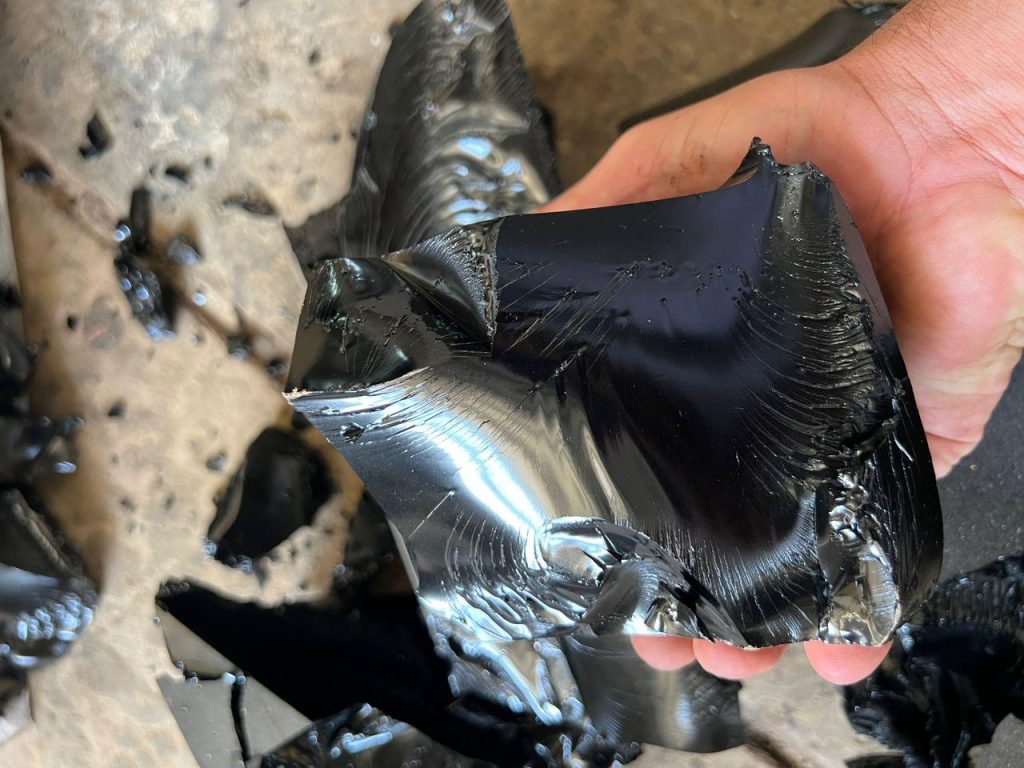
Oxidized bitumen is produced by blowing air through bitumen at high temperatures, which increases its hardness and makes it more durable. This process also makes the bitumen chemically stable and highly resistant to water penetration. Oxidized bitumen has a higher softening point and lower penetration compared to standard bitumen.
Applications of Oxidized Bitumen:
- Waterproofing: Ideal for large-scale waterproofing projects, such as dams, roofs, and basements.
- Construction: Used in road construction, especially in conjunction with other types of bitumen for added durability.
- Pipeline Protection: Often used in the oil and gas industry to cover pipelines and prevent corrosion.
-
Performance Grade Bitumen (PG Bitumen)
Performance grade (PG) bitumen is a modern grading system that focuses on the performance of bitumen at both high and low temperatures. It measures how well bitumen can withstand stresses such as rutting in high heat and cracking in cold conditions. PG bitumen is categorized based on its ability to perform under specific temperature ranges.
Classification of PG Bitumen:
- High-Temperature Performance: Evaluates how well bitumen resists rutting under high temperatures (typically in the range of 46°C to 82°C).
- Low-Temperature Performance: Assesses bitumen’s ability to resist cracking at low temperatures (ranging from -46°C to -10°C).
Example: A PG 64-10 bitumen has a high-temperature performance of 64°C and a low-temperature performance of -10°C.
Applications of PG Bitumen:
- High-Performance Pavements: Widely used in areas subject to extreme temperature variations and heavy traffic.
- Infrastructure Projects: Suitable for new road construction and the rehabilitation of existing roads.
Bitumen Quality Tests
Bitumen quality testing is crucial for assessing the characteristics and classification of bitumen, both during production and for ensuring the quality of incoming and outgoing shipments in ports. These tests help ensure that bitumen meets the required specifications for various applications, such as road construction and waterproofing. The tests are performed to guarantee that bitumen complies with industry standards, ensuring reliable performance in different environmental conditions. The key tests are listed below, as outlined by SGS standards:
-
Penetration Test
The penetration test is fundamental for assessing the hardness and softness of bitumen, which determines its suitability for specific applications. Bitumen is classified according to the depth the needle penetrates the sample under a standard load. The higher the penetration value, the softer the bitumen, making it suitable for colder climates where flexibility is required. In contrast, lower penetration values indicate harder bitumen, ideal for hot climates where increased resistance to softening is necessary.
- Procedure: A standard 100-gram needle is pressed into a sample of bitumen for 5 seconds, and the depth of penetration is recorded in 0.1mm units.
- Significance: This test helps identify bitumen suitable for specific temperatures and environmental conditions. It also provides insight into the loading capacity and ductility of the bitumen, which are crucial for road construction.
-
Viscosity Test
Viscosity is a critical property that influences the ability of bitumen to properly bind to aggregates during asphalt production. The viscosity of bitumen is highly temperature-dependent, and testing it at varying temperatures helps in determining its behavior in real-world conditions, particularly during mixing and compaction.
- Procedure: The test measures the time it takes for a known volume of bitumen to pass through a viscometer at 60°C and 135°C. The result is adjusted for device-specific correction factors to calculate the viscosity value.
- Significance: This test ensures the bitumen is neither too thick (which would impede proper mixing) nor too thin (which would cause instability). This property is essential for optimal adhesion and performance under varying temperatures.
-
Softening Point Test
The softening point test determines the temperature at which bitumen begins to soften. This is crucial because it indicates at what temperature the material loses its adhesive properties, which could lead to deformation under heavy traffic.
- Procedure: The sample of bitumen is placed between two brass rings, with a steel ball placed on top. The assembly is heated in a water bath. The softening point is recorded when the bitumen sample allows the ball to fall through the ring and touch the bottom of the glass container.
- Significance: The softening point helps engineers understand the behavior of bitumen at high temperatures, allowing them to predict performance in hot climates and prevent rutting or other forms of road damage.
-
Ductility Test
Ductility measures the ability of bitumen to stretch without breaking, which is important for road surfaces to withstand traffic stress, temperature fluctuations, and expansion or contraction. High ductility indicates that bitumen will have good resistance to cracking and will be able to adapt to environmental changes.
- Procedure: A sample of bitumen is placed in a mold, and the mold is pulled apart at a constant rate of 5 cm per minute. The distance that the bitumen stretches before breaking is measured.
- Significance: Greater ductility corresponds to a bitumen that can handle temperature variations without cracking, thus prolonging the lifespan of asphalt pavements.
-
Specific Gravity Test
Specific gravity is the ratio of the mass of a bitumen sample to the mass of an equal volume of water. This test provides insight into the bitumen’s purity and quality by detecting the presence of impurities.
- Procedure: The bitumen sample is weighed using a pycnometer, a special device used to measure the volume and mass of liquids. The mass of the sample is compared to the mass of an equal volume of water.
- Significance: A higher specific gravity generally indicates purer bitumen, with fewer contaminants or additives that could impair its performance. Read more
-
Solubility in Trichloroethylene (TCE)
This test assesses the purity of bitumen by determining the amount of non-bituminous material, such as contaminants or impurities, that can be dissolved in trichloroethylene (TCE).
- Procedure: A sample of bitumen is dissolved in a fixed amount of TCE, and the solution is filtered. Any non-bituminous residue is then weighed.
- Significance: Bitumen with high solubility indicates high purity, while a significant amount of insoluble material suggests poor-quality bitumen, which may impact adhesion and other properties.
-
Flash and Fire Point Test
These tests determine the safety of bitumen by identifying the temperatures at which bitumen can ignite. The flash point is the temperature at which vapors from the bitumen ignite when exposed to a flame, while the fire point is the temperature at which sustained combustion occurs.
- Procedure: Bitumen is heated in a special cup, and a flame is applied at regular intervals. The flash point is recorded when a small flash appears above the surface. The fire point is noted when sustained combustion is observed.
- Significance: These tests are essential for determining the safe storage, handling, and transport temperatures of bitumen to avoid fire hazards. Read More
-
Loss on Heating Test
This test measures the volatility of bitumen by heating it to remove volatile compounds. A higher percentage of loss indicates that the bitumen is prone to losing elasticity and becoming hard during high temperatures.
- Procedure: A sample of bitumen is heated in an oven at 163°C for five hours, and the change in weight is recorded.
- Significance: Bitumen with minimal loss on heating is ideal for construction as it retains its flexibility and adhesive properties, while excessive loss may lead to premature hardening and reduced performance.
-
Spot Test
This test detects potential damage to bitumen caused by overheating during the refining process, which could lead to cracking and poor adhesion.
- Procedure: A small amount of bitumen is dissolved in a solvent, and a drop of the solution is placed on filter paper. The appearance of the drop after cooling indicates whether the bitumen has been degraded.
- Significance: This test helps ensure that bitumen maintains its adhesive quality and consistency, crucial for effective road construction.
-
Drop in Penetration after Heating Test
This test evaluates how much harder the bitumen becomes after being heated, which can result from the loss of volatile components during mixing or construction.
- Procedure: The bitumen is heated at 163°C for five hours, then allowed to cool. A penetration test is performed before and after heating, and the difference in penetration is calculated as a percentage.
- Significance: This test helps assess the performance of bitumen after heating and ensures it retains adequate flexibility and workability during the paving process.
Annual Consumption of Bitumen
Bitumen consumption has seen a steady increase from 2000 to 2020, driven by several key factors in construction and industrial sectors. The largest consumer of bitumen remains the road construction industry, which uses the material extensively for new road projects and the maintenance of existing roads. The demand for bitumen has consistently approached 100 million barrels per year, fueled by:
- Expansion and rehabilitation of road networks: This includes the construction of new highways and the repair of aging infrastructure to extend its lifespan.
- Increased use in roofing: With urbanization and building expansion, bitumen has become a key component in roofing materials, offering durability and waterproofing.
- Growth in civil engineering projects: Bitumen is also essential for a variety of other infrastructure works, such as dam construction, airport runways, and waterproofing applications.
Key factors influencing the global demand for bitumen annually include:
- Economic Growth: As economies grow, infrastructure development projects surge, increasing the need for bitumen.
- Government Budgets for Road Maintenance: National and local governments’ allocations for road repair and development directly impact bitumen consumption.
- Natural Disasters: Events such as floods, landslides, and earthquakes can lead to emergency road repairs, increasing short-term demand for bitumen.
- Unplanned Events: Crises like accidents, and pandemics (e.g., COVID-19) can either hinder or drive temporary spikes in demand for construction materials.
Asia-Pacific is the largest consumer of bitumen globally, with significant demand from China, driven by the country’s focus on sustainable construction and the development of eco-friendly roads, and India, where vast road network improvements are underway. In Europe, the consumption of bitumen is notably high, while North America—particularly the United States and Canada—also shows considerable demand. On the other hand, African countries exhibit the lowest consumption of bitumen due to limited infrastructure development.
In 2020, bitumen consumption exceeded 100 million cubic meters. However, this figure could have been even higher if not for the COVID-19 pandemic, which led to delays and halts in construction projects worldwide. Despite two waves of the pandemic in 2021, the gradual return to normalcy, aided by mass vaccinations, has led to a rebound in bitumen consumption, especially in construction sectors.
Looking ahead, bitumen consumption is projected to decline by less than 4% from 2022 to 2026, primarily due to a reduction in large-scale road construction projects, particularly the development of sustainable, eco-friendly road networks in regions like China.
Health Impacts of Bitumen
Bitumen, though not highly toxic, can pose health risks, particularly to workers exposed to it regularly. When handling bitumen, safety precautions are essential to prevent harmful effects on health:
Protective Measures for Workers:
- Wearing long-sleeved work clothing and protective pants.
- Using thermally insulated gloves to handle hot bitumen.
- Wearing vented goggles when working with bitumen in liquid form.
- A face shield is recommended when working with corrosive or toxic substances.
- Masks are essential when exposed to toxic vapors or foam.

Health Effects:
- Short-Term Exposure: Breathing in heated bitumen vapors can cause symptoms such as coughing, sore throat, headaches, fatigue, skin rashes, eye irritation, and respiratory issues.
- Long-Term Exposure: Chronic exposure can result in more serious conditions such as lung and stomach cancer, skin pigmentation changes, bronchitis, and emphysema. Moreover, bitumen additives may also lead to liver, kidney, and nervous system damage. If bitumen releases hydrogen sulfide gas when heated, it can cause suffocation or even death.
Due to the highly flammable nature of bitumen, stringent precautions are necessary to avoid ignition sources such as cigarette butts, open flames, or sparks during storage and handling.
Environmental Impact of Bitumen
Bitumen use in road construction has several environmental impacts, particularly related to air quality and soil health.
Air Pollution: Heating bitumen releases toxic vapors into the atmosphere, contributing to air pollution. This is especially evident in warmer climates, where evaporation is more frequent. Additionally, burning bitumen emits greenhouse gases and particulate matter.
Soil Fertility: Applying bitumen reduces soil fertility by limiting essential nutrients like iron and calcium, which are vital for plant growth. To mitigate this, chemical fertilizers can improve soil productivity, though care must be taken to avoid further environmental harm.
Packaging and Waste: Bitumen’s transportation and packaging contribute to environmental waste. Traditionally packaged in steel drums, this solution is secure but costly and generates considerable waste. More sustainable alternatives, such as jumbo bags and Flexitanks, are being adopted to reduce environmental impact and packaging costs.
Bitumen Pricing
The price of bitumen is heavily influenced by factors such as crude oil prices, market supply and demand, and geopolitical conditions. Historically, bitumen prices have followed fluctuations in crude oil prices.
In early 2020, the COVID-19 pandemic caused a sharp drop in oil prices, subsequently affecting bitumen prices, as construction and industrial projects came to a halt. The subsequent price changes were influenced by the ongoing pandemic and varying levels of restrictions across countries.
In 2021, bitumen prices continued to fluctuate due to the impact of the Delta and Omicron variants of COVID-19, though the price began to stabilize as construction projects resumed globally. It is expected that, provided global conditions remain stable, bitumen prices will see gradual increases starting in 2022.
In the Middle East, key suppliers of bitumen include Iran, Iraq, and Bahrain. Local price variations in the region are impacted by several factors:
- Global crude oil prices.
- Regional costs of sulfur fuel oil.
- Demand from major consumer countries like India.
- Currency fluctuations, particularly the value of the Iranian Rial against the US dollar.
- Competition from other bitumen-producing nations like South Korea, Singapore, Thailand, and Italy.
- Political tensions, especially in the Persian Gulf.
- The ongoing effects of the COVID-19 pandemic on trade and demand.
- Local refinery competition and regional shipping costs.
These factors also have a significant impact on bitumen prices globally.
Storage, Packaging, and Shipping Conditions
Bitumen, a highly viscous and flammable substance, requires careful handling and appropriate packaging to ensure safety during transportation and storage. Several packaging options are available, depending on whether the bitumen is solid or liquid:
- New Steel Drums: Commonly used for bitumen due to their safety and ease of handling. Available in various sizes, they offer high security but can be expensive.
- Jumbo Bags: A more cost-effective and environmentally friendly packaging option. These are particularly used for bulk shipments and help reduce the overall packaging waste.
- Bulk Bitumen: Typically transported in large quantities via tankers or pipelines for large-scale infrastructure projects.
- Flexi Tanks: Flexible, large-capacity bags used for transporting liquid bitumen in bulk. These are lightweight and reduce the risk of spillage.
Due to its flammability, bitumen should always be stored in a cool, dry place away from heat sources. Proper ventilation is critical to prevent the accumulation of toxic vapors.
Bitumen Shelf Life
The shelf life of bitumen varies by grade and composition. Penetration-grade, viscosity-grade, and performance-grade bitumen last 3 to 15 years when stored properly, remaining stable.
Liquid bitumen, like emulsions or cutback bitumen, has a shorter shelf life of about 6 months due to volatile additives. These products need careful storage to maintain quality.
In conclusion, bitumen is vital for global construction, especially road building. Its consumption depends on economic factors, government policies, and natural disasters. While bitumen poses health and environmental risks, proper handling can mitigate these. As demand for sustainable infrastructure grows, the bitumen industry must adapt to new environmental standards.