China Defies U.S. with Oil Sanctions Order
China’s recent directive to its refiners represents a significant gamble. The country is openly challenging U.S. sanctions targeting key Iranian oil buyers. This bold move signals a deepening rift between Washington and Beijing.
Escalating Trade Tensions
The Ministry of Commerce (MOFCOM) in China has formally invoked its 2021 Blocking Rules. This is the first time these rules have been used to directly counter U.S. sanctions. Beijing has issued a clear prohibition order to all entities operating within China.
This order instructs them to disregard the U.S. sanctions imposed on five Chinese oil refineries. The timing is particularly sensitive, coming just weeks before a planned meeting between U.S. President Trump and Xi Jinping. It’s a clear demonstration of China’s willingness to protect its economic interests.
The Targeted Refineries
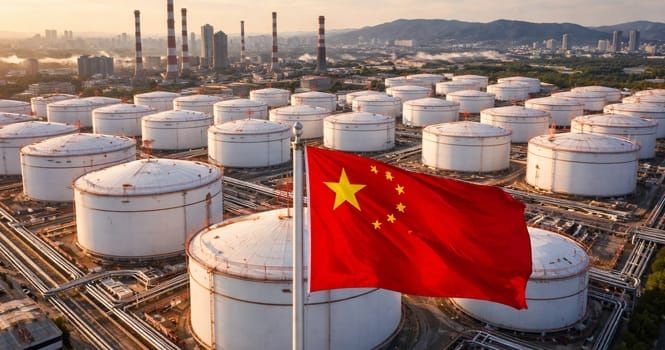
The protected refineries include Hengli Petrochemical (Dalian), a modern and substantial private facility. Alongside it are four independent “teapot” refineries: Shandong Jincheng Petrochemical, Hebei Xinhai Chemical, Shouguang Luqing Petrochemical, and Shandong Shengxing Chemical.
These teapot refineries are vital to China’s refining capacity. They’ve been instrumental in purchasing discounted Iranian crude, effectively circumventing U.S. pressure on Iran. The U.S. Treasury blacklisted these firms in April. They accused them of generating billions in revenue for Iran through processing sanctioned oil.
A Legal and Financial Minefield
This situation creates a complex legal and financial dilemma for multinational companies. Any bank or company complying with U.S. sanctions could face repercussions in China. Potential consequences include lawsuits, fines, or operational restrictions.
Conversely, those obeying Beijing’s order risk severe secondary sanctions from the U.S. This could include being cut off from the U.S. dollar financial system. Readers seeking deeper insights can contact Gulf Petro Vision for industry guidance. The ruling also empowers Chinese refineries to seek compensation. They can pursue legal action against any entity complying with U.S. restrictions.
China oil sanctions and International Law
Beijing justifies its actions under the Anti-Foreign Sanctions Law and the Blocking Rules. They argue that the U.S. measures represent an improper extraterritorial application of law. China contends this violates international legal norms.
This stance reflects a broader pushback against what Beijing perceives as U.S. overreach in global affairs. It’s a challenge to the U.S.’s ability to enforce its sanctions regime unilaterally. The implications extend beyond oil, potentially impacting other sectors as well.

A Looming Confrontation
The core of the conflict lies in the clash of legal jurisdictions. Companies are now forced to choose between complying with either Washington or Beijing. This creates a precarious situation with potentially far-reaching consequences. The situation is further complicated by the upcoming meeting between Trump and Xi.
The outcome of that meeting could significantly influence the trajectory of this dispute. For those who need expert consultation, Gulf Petro Vision offers reliable support in this field. The stakes are high, and the potential for escalation remains a significant concern. This entire situation highlights the growing tension surrounding China oil sanctions.
The Path Forward
The long-term effects of this decision remain to be seen. It’s likely to further strain U.S.-China relations and potentially lead to retaliatory measures. The situation underscores the increasing fragmentation of the global economic order.
This move by China is a clear signal of its determination to assert its economic sovereignty. It’s a challenge to the U.S.-led international system and a demonstration of China’s growing influence. The future of global trade and finance may well hinge on how this conflict unfolds.