The Role of Bitumen in Kenya’s Infrastructure Growth
Bitumen is a vital binding material widely used in road construction, waterproofing, and other industrial applications. In Kenya, a nation experiencing rapid infrastructure development, the demand for bitumen is closely linked to public and private sector construction initiatives. As one of East Africa’s largest and most dynamic economies, Kenya’s push toward modernization is fueling consistent growth in bitumen consumption, especially with the increasing implementation of large-scale national and county-level projects.
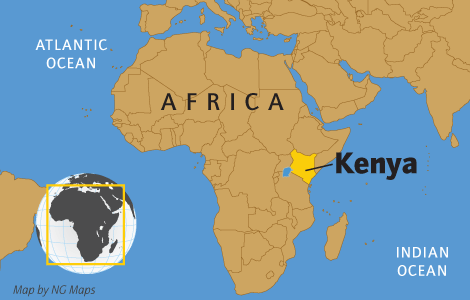
Infrastructure Projects Fueling Bitumen Demand in Kenya
Kenya’s infrastructure expansion is anchored by its ambitious Vision 2030 development agenda and supported by public-private partnerships, international funding, and government allocations. Several flagship projects are driving the country’s appetite for high-quality bitumen:
1. Kenya Vision 2030 Infrastructure Projects
From highways to railroads, bridges, and expressways, the Vision 2030 initiative includes a wide range of national infrastructure goals. Road projects under this program require massive amounts of bitumen, particularly in densely trafficked and urban areas.
2. LAPSSET Corridor Program
The Lamu Port-South Sudan-Ethiopia Transport (LAPSSET) Corridor is a multibillion-dollar infrastructure initiative linking Kenya with Ethiopia and South Sudan. The project includes roads, railways, and pipeline construction—all of which require large volumes of bitumen.
3. County-Level Road Upgrades
More than 10,000 kilometers of rural and feeder roads are being upgraded under devolved government programs. County-level tenders continue to boost demand for bitumen, particularly drummed bitumen suitable for inland transport.
4. Urban Expressways and Ring Roads
Major cities like Nairobi and Mombasa are expanding their ring roads, bypasses, and expressways to reduce congestion. These projects are typically high-volume bitumen consumers due to their continuous asphalt layering needs.
These extensive developments, supported by consistent funding and private sector collaboration, have ensured steady growth in Kenya’s bitumen import volumes.

Economic Outlook: A Positive Signal for Construction Growth
According to recent data from the Central Bank of Kenya (CBK) and the World Bank, Kenya’s economy is projected to grow at a rate of over 5.2% in 2025. This recovery is driven by improved fiscal management, better investor confidence, and increased government expenditure on infrastructure.
Key Impacts on Construction and Bitumen Demand:
- Higher infrastructure budget allocations: More funds are being channeled toward roads, housing, and industrial parks.
- Renewed investor interest: PPPs and donor-funded projects are regaining momentum after a period of fiscal tightening.
- Resumption of delayed projects: Construction activities previously halted due to funding constraints are now restarting.
- Boom in private sector development: Real estate, logistics hubs, and industrial zones are driving bitumen usage.
This favorable economic climate ensures consistent demand for bitumen across both public and private projects, creating strong opportunities for regional and international suppliers.

Bitumen Pricing Trends: Iran’s Export Influence in May 2025
As a leading global exporter of bitumen, Iran’s pricing strategy and logistical efficiencies significantly affect East African markets, including Kenya. Iranian suppliers offer both bulk and drummed bitumen at competitive rates, especially for CFR (Cost and Freight) shipments to Mombasa.
Recent Iranian Bitumen Price Movements:
- Bulk Bitumen: Price dropped by $1.40 per metric ton (MT)
- Drummed Bitumen (FOB Bandar Abbas): Decreased by $4 per MT
Contributing Factors:
- Competitive pricing from other suppliers (e.g., Bahrain, India)
- Easing global crude oil prices
- Decreased shipping demand during and after Ramadan
- Increased refinery output in the Middle East
Despite these slight price reductions, Kenyan buyers have continued to place large orders, highlighting their reliance on Iranian bitumen due to its affordability and consistent availability.

Why Iranian Bitumen Is Preferred by Kenyan Buyers
Iranian bitumen maintains a strong presence in the East African market for several practical and economic reasons:
1. Cost-Effectiveness
Iranian suppliers offer one of the lowest FOB and CFR rates for drummed and bulk bitumen. The reduced costs help Kenyan contractors manage their overall project budgets efficiently.
2. Flexible Packaging Options
Suppliers provide both bulk and 180-kg drummed bitumen, with the latter being ideal for inland transport from Mombasa to cities like Nairobi, Kisumu, and Eldoret.
3. Established Shipping Routes
Trade routes via Bandar Abbas and Jebel Ali are well-established, ensuring timely delivery to Mombasa Port. Efficient shipping logistics translate to reduced delivery delays.
4. Grade Variety and Climate Compatibility
Iranian bitumen producers offer various penetration grades like 60/70 and 80/100, which are suitable for Kenya’s hot and semi-arid climate.

Bitumen Movement and Shipping to Mombasa
Mombasa Port is Kenya’s primary gateway for bitumen imports, serving not just Kenya but also neighboring countries such as Uganda, Rwanda, and South Sudan. Here are the current logistics and shipping trends impacting Kenyan bitumen imports:
Shipping Insights:
- Average shipment size: 1,000–2,500 metric tons
- Preferred packaging: 180-kg steel drums
- Freight rates (Bandar Abbas to Mombasa)
- Customs clearance and inland transport
Market Outlook: Bitumen Demand in Kenya Through 2025
The outlook for Kenya’s bitumen market is highly positive, backed by macroeconomic strength, a busy construction season, and ongoing regional connectivity projects.
Short-Term Outlook (Next 3 Months):
- High buying activity due to favorable weather conditions
- Increased demand from active county and national-level projects
- Slight price corrections expected if crude oil rebounds
Medium-Term Outlook (6–12 Months):
- Peak construction season (August–October) will drive further demand
- More counties expected to roll out road improvement initiatives
- Growing adoption of alternative packaging like jumbo bags and flexitanks to reduce shipping costs
- Enhanced regional cooperation via platforms like the East African Community (EAC) Infrastructure Summits
Bitumen suppliers targeting Kenya should closely monitor construction timelines and maintain sufficient inventory to meet rising demand during the dry season.

Conclusion: Kenya Offers a Robust Market for Bitumen Suppliers
Kenya’s infrastructure boom is creating a fertile ground for bitumen suppliers and exporters, especially those offering high-quality products at competitive prices. Despite minor fluctuations in Iranian FOB rates, demand from Kenya remains strong and consistent.
With its growing economy, continued infrastructure funding, and favorable climate for construction, Kenya is positioned as a leading bitumen importer in East Africa. Exporters who align with local expectations in quality, logistics, and payment flexibility stand to benefit immensely from this expanding market.
By strategically timing shipments, ensuring regulatory compliance, and working with local distribution partners, bitumen exporters can secure long-term contracts and grow their market share in Kenya’s vibrant infrastructure sector.