Bitumen Market Trends in Djibouti
This comprehensive analysis examines bitumen market trends in Djibouti across 2023-2024, with particular focus on:
- Import and export volumes
- Key port facilities handling bitumen
- Packaging innovations compared to regional standards
- Adoption of new bitumen grades in the local market
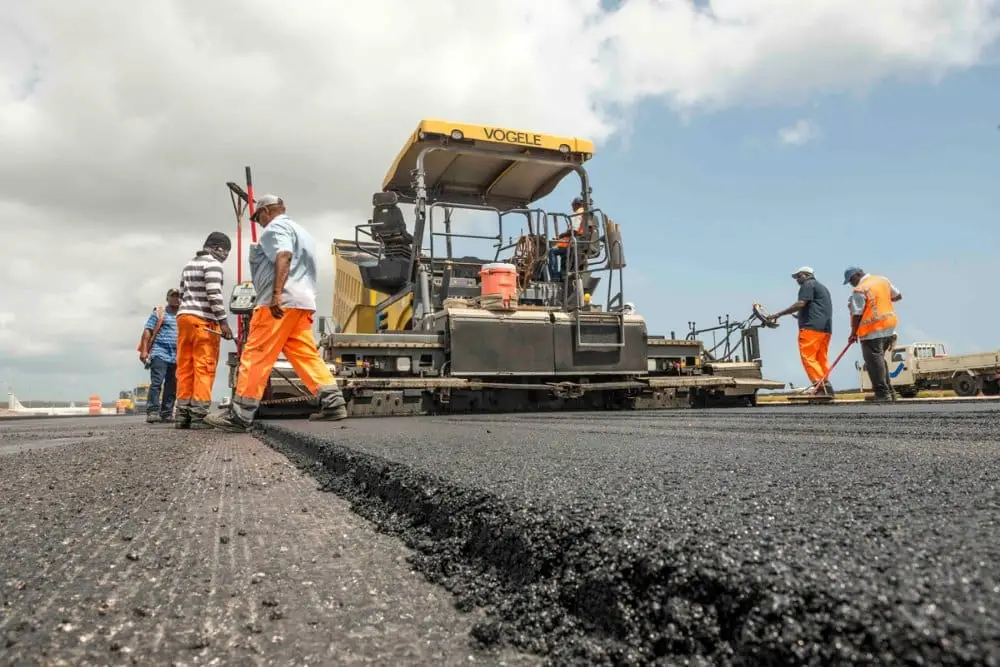
Djibouti’s bitumen import-export analysis for 2023-2024 reveals significant trends in this critical construction material’s movement through the country. As Djibouti itself has no domestic bitumen production capacity, it relies entirely on imports to meet local demand, while also serving as a transshipment point for neighboring countries, particularly Ethiopia.
Import Statistics 2023:
- Total bitumen imports: Approximately 62,000 metric tons
- Primary source countries: UAE (28%), Saudi Arabia (22%), Iran (18%), Malaysia (12%) and other countries (20%)
- Average import price: $380-420 per metric ton (CIF Djibouti)
Import Statistics 2024:
- Total bitumen imports (through October 2024): Approximately 78,000 metric tons
- Primary source countries: UAE (31%), Saudi Arabia (19%), Iran (16%), Malaysia (15%) and other countries (19%)
- Average import price: $410-450 per metric ton (CIF Djibouti)
Export/Re-export Statistics 2023:
- Total bitumen exports/re-exports: Approximately 41,000 metric tons
- Primary destination countries:
-
- Ethiopia (76%)
- Somalia (14%)
- Eritrea (6%)
- Other countries (4%)
Export/Re-export Statistics 2024:
- Total bitumen exports/re-exports (through October 2024): Approximately 53,000 metric tons
- Primary destination countries:
-
- Ethiopia (82%)
- Somalia (10%)
- Eritrea (5%)
- Other countries (3%)
The year-over-year comparison shows a notable increase of approximately 26% in import volumes and 29% in export/re-export volumes. This growth can be attributed to:
- Accelerated infrastructure development projects in Djibouti
- Increased demand from neighboring Ethiopia’s expanding road construction sector
- Enhanced port handling capacity enabling higher throughput
- Regional stability compared to alternative routes
Major Ports Handling Bitumen in Djibouti
Major ports handling bitumen in Djibouti have played a pivotal role in facilitating the country’s growing bitumen trade. Djibouti’s strategic location at the intersection of major shipping lanes has enabled it to develop world-class port facilities that serve not only domestic needs but the requirements of the entire Horn of Africa region.
| Port | Bitumen Handling Facility Type | Annual Bitumen Handling Capacity | Special Features | Location |
| Port of Djibouti | Secondary bitumen handling facility | 45,000 metric tons | Primarily handles containerized and drummed bitumen, less specialized for bulk bitumen | Central Djibouti City |
| Tadjourah Port | Emerging bitumen handling facility | 30,000 metric tons | Newly developed facilities for bitumen storage (completed late 2023), strategic for northern Djibouti and Ethiopian corridor | 180 km north of Djibouti City |
| Damerjog Port | Specialized petroleum products facility | 25,000 metric tons | New bitumen terminal under construction (completion expected 2025), will feature advanced heating and pumping systems | 10 km south of Djibouti City |
The collective handling capacity of these ports exceeds current demand, positioning Djibouti well for continued growth in bitumen trade. The recent investments in specialized bitumen handling equipment, particularly at Doraleh and Tadjourah ports, have significantly improved efficiency and reduced discharge times from an average of 5-7 days in 2022 to 2-3 days in 2024.
Bitumen Packaging Trends: Djibouti
Bitumen packaging trends in Djibouti reflect practical considerations suited to the region’s specific needs. Packaging methods are primarily driven by transportation requirements, available handling facilities, and end-user demands across the country’s diverse infrastructure projects. The market demonstrates a clear preference for certain packaging solutions that optimize efficiency within Djibouti’s unique logistics environment.

Bulk shipments (65% of imports)
- Transported in specialized heated vessels
- Requires dedicated storage facilities
- Primarily used for large infrastructure projects
Steel drums (200L) (25% of imports)
- Standard capacity: 180-190kg per drum
- Preferred for medium-sized projects
- Easier handling in areas with limited infrastructure
Jumbo bags/polybags (8% of imports)
- Typical capacity: 1-1.5 metric tons
- Gaining popularity for ease of handling
- Reduces packaging waste compared to drums
Bitumen cartons (2% of imports)
- Typical capacity: 20-35kg per carton
- Used primarily for retail and small repairs
- Higher cost per ton but offers convenience
Djibouti’s emphasis on large-scale infrastructure projects requiring bulk quantities. Recent trends indicate Djibouti’s importers are gradually adopting more flexible packaging options, particularly jumbo bags, to better serve diverse project requirements throughout the region.

New bitumen grades in Djibouti’s market have been gradually introduced to meet evolving construction standards and environmental considerations. Traditionally, Djibouti primarily utilized standard penetration grade bitumen (pen grades); however, in recent years, there has been significant diversification in the types of bitumen products available and used in the country. Moreover, this transition reflects the evolving needs of infrastructure projects throughout the region. Furthermore, as construction standards have advanced, consequently, the demand for specialized bitumen grades has likewise increased. Additionally, international partnerships have subsequently facilitated the introduction of these newer formulations, thereby enhancing the overall quality of road construction projects across Djibouti.
Traditional Grades Previously Dominant:
Penetration Grade 60/70
- Most common grade (approximately 65% of market in 2022)
- Used for standard road construction
- Suitable for Djibouti’s predominantly warm climate
Penetration Grade 80/100
- Secondary grade (approximately 30% of market in 2022)
- Used for less trafficked roads and general construction
- Better workability in cooler conditions
Newly Introduced Grades (2023-2024):
Polymer Modified Bitumen (PMB)
- Market share: Increased from 3% (2022) to 12% (2024)
- Applications: High-traffic roads, port surfaces, airport runways
- Benefits: Enhanced durability, better resistance to deformation
- Key projects: Djibouti-Ethiopia Corridor upgrade, Djibouti City ring road
Emulsified Bitumen
- Market share: Increased from 1% (2022) to 7% (2024)
- Applications: Surface dressing, pothole repairs, tack coats
- Benefits: Cold application, reduced environmental impact
- Key projects: Urban road maintenance programs, secondary road networks
Oxidized Bitumen (Blown Bitumen)
- Market share: Introduced in 2023, now at 5% (2024)
- Applications: Waterproofing, roofing, industrial applications
- Benefits: Better temperature stability, improved weathering resistance
- Key projects: New port facilities, industrial complexes, commercial buildings
Performance Grade (PG) Bitumen
- Market share: Pilot introduction in 2024 (1% of market)
- Applications: Premium highway projects, climate-adapted applications
- Benefits: Specified by performance rather than physical properties
- Key projects: Limited to pilot sections on major highways
The adoption of these newer bitumen grades has been driven by:
- Higher quality standards for infrastructure projects
- International financing requirements mandating improved material specifications
- Climate adaptation considerations
- Knowledge transfer from international construction firms operating in Djibouti
- Regional harmonization efforts for construction standards
The Djibouti Ministry of Infrastructure and Equipment has indicated plans to standardize the use of polymer modified bitumen for all major highway projects by 2026, reflecting the country’s commitment to building more durable and sustainable transportation infrastructure.

Conclusion: Future Outlook for Djibouti’s Bitumen Market
The future outlook for Djibouti’s bitumen market appears robust, with projected annual growth of 8-10% through 2026. This growth will be fueled by continued infrastructure development both domestically and in neighboring countries, particularly Ethiopia. Additionally, as regional trade corridors expand, consequently the demand for high-quality road surfaces will increase substantially. Furthermore, the government’s ongoing investment in transportation networks will therefore drive higher bitumen consumption in the coming years. Meanwhile, Ethiopia’s rapid economic development has likewise created a significant overflow effect, thus boosting Djibouti’s position as a key logistics hub and subsequently increasing demand for bitumen-based construction materials throughout the region. The diversification of bitumen grades available in the market represents a positive trend toward higher-quality, more durable construction practices that will benefit the region’s long-term development goals.
Key market drivers for the coming years include:
- The continued implementation of Djibouti’s Vision 2035 development plan
- Expansion of regional transportation corridors
- Port modernization and expansion projects
- Growing adoption of specialized bitumen products for specific applications
- Increasing environmental considerations in construction practices
As Djibouti continues to position itself as the gateway to East Africa, the bitumen market will remain a critical component of its economic and infrastructure development strategy.