Bitumen Production Process: From Crude Oil to Final Product
Bitumen is an essential material in construction and industry, widely used for road paving, roofing, and waterproofing applications. The bitumen production process—from crude oil to the final product—is a complex series of refining, processing, and quality assurance steps designed to ensure that the bitumen meets the demanding physical and chemical requirements for its various uses.
This article provides a detailed overview of the bitumen production process, describing every step from crude oil selection through refining, oxidation, blending, testing, and packaging. Each stage is critical to producing a high-quality product suited for modern infrastructure demands.

1. Introduction: The Importance of Bitumen and Its Production Process
The importance of bitumen and its production process cannot be overstated, as bitumen forms the backbone of modern road networks and waterproofing technologies worldwide. The bitumen production process involves converting heavy fractions of crude oil into usable semi-solid materials that provide durability, adhesion, and resistance to weathering.
Given the critical role bitumen plays in infrastructure and industry, the production process must be carefully managed to ensure the bitumen’s consistency, performance, and suitability for specific climatic and loading conditions. This article will explore the entire process to provide a thorough understanding of how raw crude oil transforms into high-grade bitumen products.
2. Crude Oil Selection: Raw Materials for Bitumen Production
Crude oil selection is the foundational and critical step in the bitumen production process, as the quality and characteristics of the crude oil directly determine the properties of the final bitumen product. Typically, the crude oils suitable for bitumen production are heavy, viscous, and rich in asphaltenes and sulfur content.
To begin with, the crude oil selection process involves identifying feedstocks that contain a high percentage of heavy residual fractions after atmospheric and vacuum distillation. These heavy fractions, which boil above approximately 500°C, serve as the primary source for bitumen. Therefore, refiners carefully evaluate crude types to ensure maximum yield and performance.
Moreover, refineries often blend multiple crude oils to achieve the desired chemical balance. This blending process helps optimize key attributes such as sulfur content, viscosity, and metal concentrations, which are essential for both the efficiency of the refining process and the quality of the final bitumen.
In particular, heavy crudes from regions such as the Middle East, Venezuela, and Canada are frequently used. These crude sources are ideal because they offer the right mix of heavy hydrocarbons and impurities, making them highly suitable for bitumen manufacturing.
3. Refining Crude Oil: Atmospheric and Vacuum Distillation in Bitumen Production
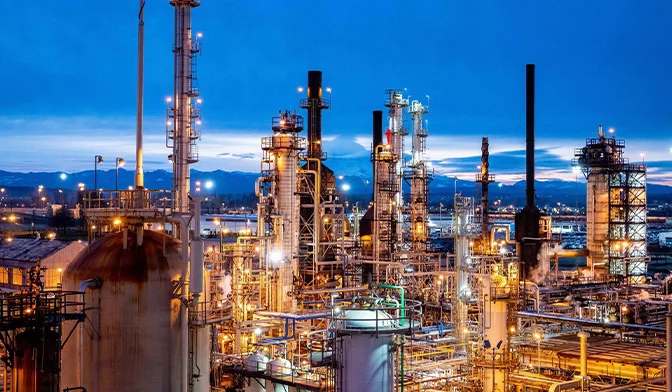
Refining crude oil through atmospheric and vacuum distillation is a pivotal stage in the bitumen production process. The refining steps separate the lighter hydrocarbons from the heavier residues that ultimately form bitumen.
3.1 Atmospheric Distillation in Bitumen Production
Atmospheric distillation is the first distillation stage, where crude oil is heated to temperatures between 300°C and 360°C. The process vaporizes lighter hydrocarbons like gasoline, diesel, and kerosene, which are collected at different levels in the distillation column.
The residue left at the bottom, called atmospheric residue, contains the heavier hydrocarbons and forms the feedstock for further processing into bitumen. This step separates the crude into useful lighter products and the heavy fraction necessary for bitumen manufacturing.
3.2 Vacuum Distillation in Bitumen Production
Vacuum distillation is the subsequent process after atmospheric distillation. By lowering the pressure inside the distillation unit, vacuum distillation allows the residue to boil at lower temperatures, preventing thermal cracking of the heavy hydrocarbons.
The vacuum distillation process separates the atmospheric residue into lighter vacuum gas oils and a heavy vacuum residue, which is the primary raw material for producing bitumen. By adjusting the operating temperature and pressure during vacuum distillation, refiners can control the consistency, hardness, and penetration grade of the bitumen produced.
Vacuum residue is often referred to as “straight-run bitumen” when it is directly used in paving applications without further modification.
4. Solvent De-Asphalting: Cleaning Bitumen Feedstocks for Better Quality
Solvent de-asphalting is an advanced refining process used to enhance the quality of bitumen by removing undesirable components from the vacuum residue. The solvent de-asphalting process injects light hydrocarbons such as propane or butane into the vacuum residue to selectively dissolve lighter fractions, leaving behind heavier asphaltenes.
This separation produces a cleaner bitumen product with reduced sulfur, metals, and other impurities, while the removed light oils, called de-asphalted oil (DAO), can be further refined into lubricants or fuels.
The choice of solvent impacts both the yield and quality of the bitumen: propane solvent de-asphalting produces a higher-quality bitumen but at a lower yield, whereas butane solvent de-asphalting offers higher yields but slightly more impurities.
Solvent de-asphalting allows refineries to produce bitumen with enhanced performance characteristics, making it suitable for more demanding paving and industrial applications.
5. Air Blowing (Oxidation): Enhancing Bitumen Properties
Air blowing, also known as oxidation, is a crucial process to modify the physical and chemical properties of bitumen, increasing its stiffness, softening point, and resistance to deformation.
5.1 The Air Blowing Process
In the air blowing process, the bitumen feedstock—typically vacuum residue or straight-run bitumen—is heated to temperatures around 280°C and exposed to a controlled flow of compressed air. This air reacts chemically with the bitumen, causing oxidation that increases the molecular weight and alters the structure of the bitumen.
The process takes place in large reactors equipped with agitators to ensure thorough mixing and uniform oxidation. The extent of air blowing determines the hardness and final properties of the bitumen product.
5.2 Types of Oxidized Bitumen
Two main types of oxidized bitumen are produced through this process:
-
Air-rectified bitumen, which is only mildly oxidized and retains much of the original flexibility.
-
Oxidized (air-blown) bitumen, which is heavily oxidized and exhibits higher stiffness, rubber-like properties, and increased resistance to heat and deformation.
5.3 Applications of Oxidized Bitumen
Oxidized bitumen is commonly used in applications requiring enhanced durability and resistance, such as roofing membranes, waterproofing coatings, pipe coatings, and industrial sealing materials. Air-rectified bitumen finds applications in paving where moderate stiffness is advantageous.
The air blowing process allows manufacturers to tailor bitumen properties precisely to meet specific industrial and infrastructure needs.
6. Blending Bitumen: Creating Custom Grades for Diverse Applications
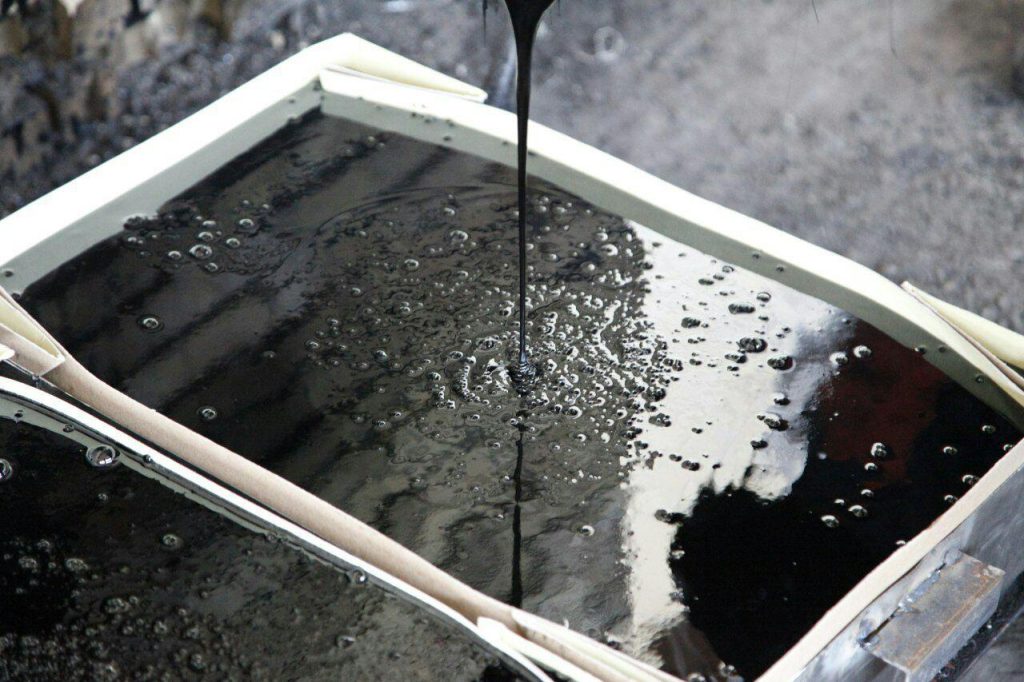
Blending bitumen is a vital step in the production process, used to achieve specific performance criteria and comply with engineering standards. This proceinvolves mixing bitumen of different hardness, penetration grades, or polymer content.
6.1 Blending Straight-Run Bitumen
Blending straight-run bitumen streams of varying penetration grades allows producers to create a final product that meets target specifications such as 40/60 or 60/70 penetration grades. This ensures consistent performance in paving and roofing applications.
6.2 Polymer-Modified Bitumen (PMB)
Polymer-modified bitumen is produced by blending polymers like Styrene-Butadiene-Styrene (SBS), Styrene-Butadiene Rubber (SBR), or Ethylene Vinyl Acetate (EVA) into bitumen. This modification greatly improves elasticity, fatigue resistance, adhesion, and temperature susceptibility.
PMB is widely used for heavy traffic roads, airport runways, coastal highways, and other demanding applications. The blending of polymers is typically done at specialized facilities equipped to handle the mixing and homogenization of polymer-bitumen blends.
6.3 Additives and Special Blends
In addition to polymers, additives such as crumb rubber, anti-stripping agents, and rejuvenators may be blended to enhance specific properties, improve durability, and extend pavement life.
Blending ensures that the bitumen product matches the climatic conditions, traffic loading, and application method for optimal performance.
7. Quality Control and Testing: Ensuring Bitumen Meets Specifications
Quality control and rigorous testing are fundamental to the bitumen production process, ensuring that the final product performs as required in the field.
7.1 Penetration Test
The penetration test measures the hardness of bitumen by assessing the depth (in tenths of a millimeter) that a standard needle penetrates the bitumen sample under controlled conditions (usually at 25°C).
This test is the primary method for classifying bitumen penetration grades such as 60/70 or 40/60.
7.2 Softening Point Test
The softening point test, often performed using the ring and ball method, determines the temperature at which bitumen softens enough for a steel ball to pass through it. This test provides insight into the bitumen’s temperature susceptibility and helps define service temperature limits.
7.3 Viscosity Testing
Viscosity tests measure the flow behavior of bitumen at specific temperatures, typically 60°C and 135°C. These tests are especially important for viscosity-grade bitumen used in heavy traffic or hot climates.
7.4 Elastic Recovery and Durability Tests
For polymer-modified bitumen, elastic recovery tests quantify the ability of bitumen to regain its shape after deformation. Durability and aging tests simulate long-term environmental exposure to predict pavement life and performance.
Other important tests include cohesion, adhesion, and temperature susceptibility, which collectively ensure that the bitumen will withstand the stresses it will face in service.

8. Storage, Transportation, and Packaging of Bitumen
Proper storage, transportation, and packaging are vital to maintain the quality of bitumen during delivery from the refinery to end users.
8.1 Storage of Bitumen
Refineries and storage facilities maintain bitumen at elevated temperatures—typically around 150°C—to keep it fluid and easy to handle. They insulate storage tanks and equip them with heating coils and agitators to prevent the bitumen from solidifying or degrading.
By storing bitumen properly and maintaining the correct temperature, operators effectively prevent it from becoming too viscous or developing defects. Consequently, this careful management ensures that the bitumen maintains its quality and performs optimally during application. Furthermore, proper storage reduces the risk of costly project delays and material wastage.
8.2 Transportation of Bitumen
Transportation typically occurs in insulated tanker trucks, rail tankers, or shipping vessels equipped with heating capabilities to keep the bitumen in a pumpable state.
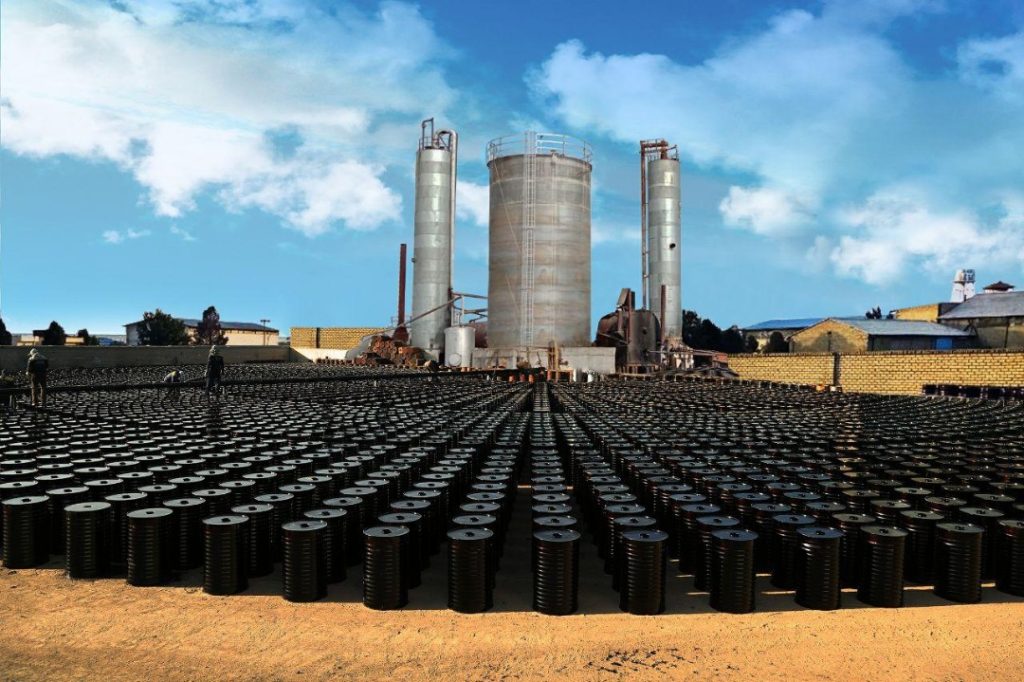
Smaller quantities may be transported in steel drums or specialized bitumen bags. Prior to use, these packages are heated to soften the bitumen.
8.3 Packaging of Bitumen
Common packaging formats include bulk tanks for large construction projects and steel drums for smaller-scale applications. Bulk transport is preferred for large paving projects due to efficiency and cost-effectiveness.
During transport and handling, safety protocols are essential to protect workers from hot bitumen burns and exposure to fumes.

9. Environmental and Safety Considerations in Bitumen Production
Operators must carefully manage the environmental and safety challenges involved in the bitumen production process.
9.1 Environmental Impact
During the bitumen production process, oxidation units and refinery operations emit gases such as sulfur oxides and volatile organic compounds (VOCs). Consequently, these emissions require careful monitoring and control to minimize environmental impact. Moreover, refineries implement advanced technologies to reduce these harmful gases and comply with environmental regulations. Modern refineries employ scrubbers and abatement technologies to minimize emissions and comply with environmental regulations.
The use of cutback bitumen, which contains solvents, has decreased due to VOC emission concerns, with emulsions and hot-mix asphalts preferred alternatives.
9.2 Safety Measures
Handling bitumen at elevated temperatures poses burn risks and inhalation hazards. Proper ventilation, personal protective equipment, and training are essential to ensure worker safety.
Designers must create storage and transport facilities that minimize leaks, prevent spills, and reduce fire risks.
10. Final Products and Applications: The Outcome of the Bitumen Production Process
The bitumen production process yields various products designed for specific applications:
10.1 Paving Bitumen
Paving bitumen, including penetration and viscosity grades, is the most common product. Engineers and contractors use it in hot-mix asphalt for roads, highways, airport runways, and parking lots. Typically, engineers and contractors carefully evaluate climatic and traffic requirements; therefore, they commonly choose grades such as 60/70 penetration and VG-30 viscosity grade to ensure optimal performance. Additionally, these choices help maximize durability and cost-effectiveness in various paving projects.
10.2 Oxidized and Air-Rectified Bitumen
Manufacturers use oxidized bitumen in roofing membranes, waterproofing coatings, pipe coatings, and industrial sealing. They apply air-rectified bitumen, which undergoes milder oxidation, in certain paving applications.
10.3 Polymer-Modified Bitumen
PMB products provide enhanced performance and are increasingly popular in heavy traffic roads, airports, ports, and infrastructure exposed to extreme temperatures or heavy loads.
10.4 Bitumen Emulsions and Cutbacks
Emulsified bitumen and cutback bitumen allow cold application techniques such as chip seals and slurry seals. These forms are ideal for maintenance and rehabilitation of pavements.

Conclusion: Understanding the Complete Bitumen Production Process
The bitumen production process is a detailed, multi-step journey that transforms heavy crude oil fractions into versatile, high-performance materials essential for modern infrastructure.
From crude oil selection through atmospheric and vacuum distillation, solvent de-asphalting, air blowing, blending, and rigorous quality testing, every stage shapes the properties of the final bitumen product.
Proper handling, storage, and environmental management help ensure safe delivery of bitumen and preserve its quality for demanding applications.
A thorough understanding of this process helps professionals in construction and petroleum make informed decisions, choose the right materials, and build durable, sustainable infrastructure worldwide.