Sanctions Send Rosneft Cargo on a Global Chase
The story of a single cargo of crude oil—700,000 barrels originating from Russian energy giant Rosneft—is becoming a surprisingly clear illustration of the escalating complexities and consequences of international sanctions. For eleven weeks, this shipment has wandered the seas, a floating testament to the shifting landscape of the **Russian oil trade**, desperately seeking a willing buyer. It’s a journey that highlights how even seemingly straightforward commodity transactions are now deeply entangled in geopolitical maneuvering.
A Long and Winding Route
The oil’s odyssey began in late September aboard the Ailana tanker, departing from Ust-Luga, a Russian port on the Baltic Sea. Initially, the plan seemed straightforward: a trip around Europe, through the Mediterranean, and onward through the Suez Canal towards India. However, just as the Ailana neared Indian shores in late October, the U.S. dramatically tightened sanctions, targeting Rosneft and Lukoil, Russia’s two largest oil producers. The aim was clear: to compel Russia towards genuine negotiations to end the war in Ukraine.
This sudden shift in policy threw Indian refiners into disarray. Faced with the prospect of incurring U.S. penalties, India abruptly halted imports of crude linked to Rosneft and Lukoil. The Ailana, effectively stranded, idled off the coast of Mumbai for two weeks, a visible symbol of the sanctions’ immediate impact.
Ship-to-Ship Transfers and Evolving Destinations
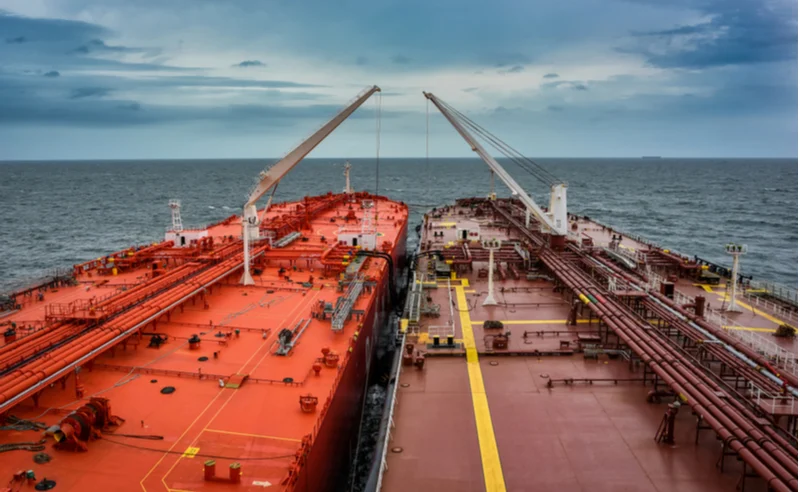
The cargo didn’t remain idle for long, but its journey took a curious turn. Most of the oil was transferred to the Fortis tanker, which initially signaled destinations in India and South Korea. However, the Fortis then altered course, eventually anchoring off the Chinese port of Rizhao on the east coast earlier this week. This port, too, is under U.S. sanctions, imposed as part of a broader effort to curb China’s purchases of Iranian crude.
The fact that the Fortis has arrived so close to a sanctioned port doesn’t guarantee it will offload its cargo there. The extended voyage and the ship-to-ship transfer itself—a common practice, but one that adds layers of complexity and potential scrutiny—strongly suggest that potential buyers, particularly in India, are actively avoiding any association with sanctioned Russian companies and their oil. Readers seeking deeper insights can contact Gulf Petro Vision for industry guidance.
India’s Shift and the Search for Alternatives
U.S. sanctions disrupted the plans of Indian refiners, forcing them to pull back from the spot market for Russian crude in December. India still imports large volumes of Russian oil, but refiners now prioritize suppliers not directly targeted by sanctions. Reports show that Bharat Petroleum and Indian Oil Corporation have booked Russian crude for January from these alternative companies, securing discounts of $6–$7 per barrel below Brent. This highlights India’s continued interest in Russian oil—provided the deals reduce the risk of secondary sanctions.
The Future of the Russian Oil Trade
The Fortis’s current predicament encapsulates the broader challenges facing Russia’s oil industry.
Finding reliable buyers is becoming harder, and logistical hurdles—such as ship-to-ship transfers and complex sanctions—are adding significant costs and delays. The long-term impact of these sanctions is still developing, but the Russian oil trade is clearly entering a major period of change. This single cargo reflects that wider shift and shows how geopolitics can immediately reshape global commodity flows. Continued pressure on Russia’s energy sector will likely alter global oil trade patterns for years, keeping the Russian oil trade at the center of geopolitical conflict.

A Complex Landscape
The situation is further complicated by the opaque nature of some oil trading practices. Ship-to-ship transfers, while not inherently illegal, can be used to obscure the origin of the oil and evade sanctions. This makes it harder for authorities to track and enforce compliance. The fact that the Fortis has spent so long at sea, changing course multiple times, raises questions about the ultimate destination of the cargo and the identity of the final buyer.