Rising Costs Halt Persian Gulf oil shipments
The global energy market faces a sudden and unexpected supply squeeze. Major refiners in China and India are struggling to secure transport. High freight costs are making cargo movement nearly impossible right now. These disruptions impact Persian Gulf oil shipments destined for Asian ports.
Freight Costs Spike Unpredictably
Skyrocketing tanker rates are stalling vital crude oil movements. PetroChina recently reviewed several offers for Very Large Crude Carriers. They rejected every single bid for Basrah crude loading. The freight prices were triple the usual pre-war levels.
Finding affordable vessels has become a significant logistical nightmare. One executive noted that tankers actually exist in the market. However, the cost of hiring them remains prohibitively high. This financial barrier is stopping many planned shipments immediately.
The search for vessels continues despite these steep price hikes. Companies want to load Basrah crude by late June. These delays could impact fuel availability in the region. Market stability relies on consistent and affordable shipping routes.
Uncertainty in the Strait of Hormuz
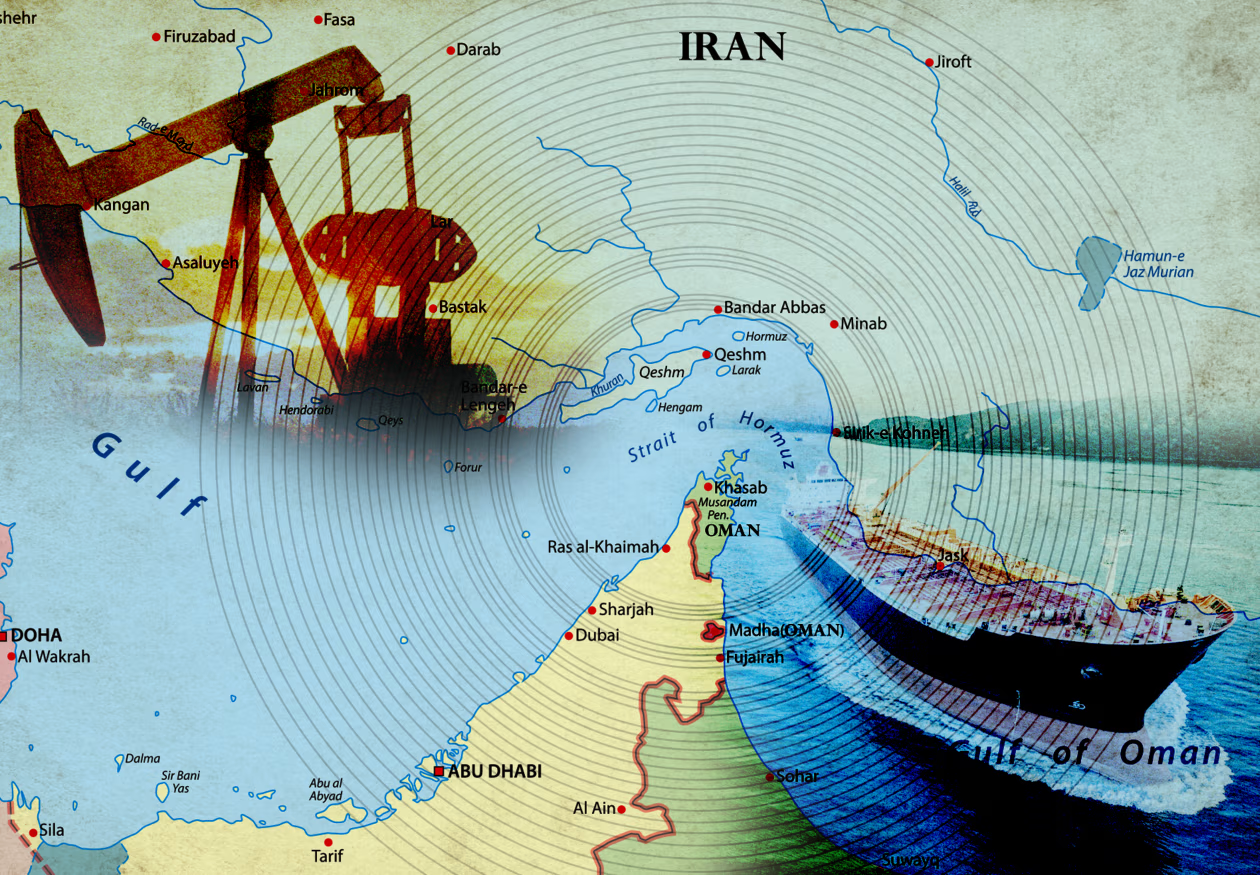
Safety remains a primary concern for international shipping companies. No one can guarantee safe passage through the strait. This lack of security adds a massive risk premium. Many operators prefer to avoid the area entirely today.
Indian Oil Corporation faced similar hurdles with their recent orders. They received zero offers for tankers to carry Iraqi crude. This forced them to declare force majeure on cargo. Such declarations signal deep trouble for regional supply chains.
Negotiating special transit clauses has become a new industry standard. Both parties must agree on specific risk management terms. For those who need expert consultation, Gulf Petro Vision offers reliable support in this field. Such guidance helps navigate these complex maritime legalities.
A Slow Return to Normalcy
Diplomatic hopes for a resolution have recently emerged lately. A U.S.-Iran deal might suggest a coming period of calm. However, major tanker operators are not rushing back yet. They are waiting for much clearer signals of safety.
Industry leaders suggest a cautious approach to the Middle East. It may take weeks or months to normalize. The recent months of instability have left deep scars. Shipping companies prioritize vessel safety over immediate profit gains.
The logistics of moving crude will remain complicated soon. High costs and transit fears are currently driving this trend. We may see more force majeure declarations very shortly. Markets must prepare for continued volatility in shipping.
Impact on Persian Gulf oil shipments
Global energy consumers must watch these developments very closely. Supply chains are currently stretched to their breaking points. The combination of price and risk is uniquely challenging. This situation directly threatens Persian Gulf oil shipments.