Iran Israel Oil Tensions Spike After Missile Attacks
Markets woke to a familiar jolt this Monday morning. Iran launched ballistic missiles at Israel late Sunday night. The attack shattered a fragile ceasefire that had held since April. Oil traders immediately priced in a higher risk premium.
Brent crude jumped 3.45% to trade near $96.30 per barrel. West Texas Intermediate followed with a 3.41% gain to $93.63. The spike reflected deepening fears over a full-scale conflict. Diplomacy between Washington and Tehran now appears increasingly uncertain.
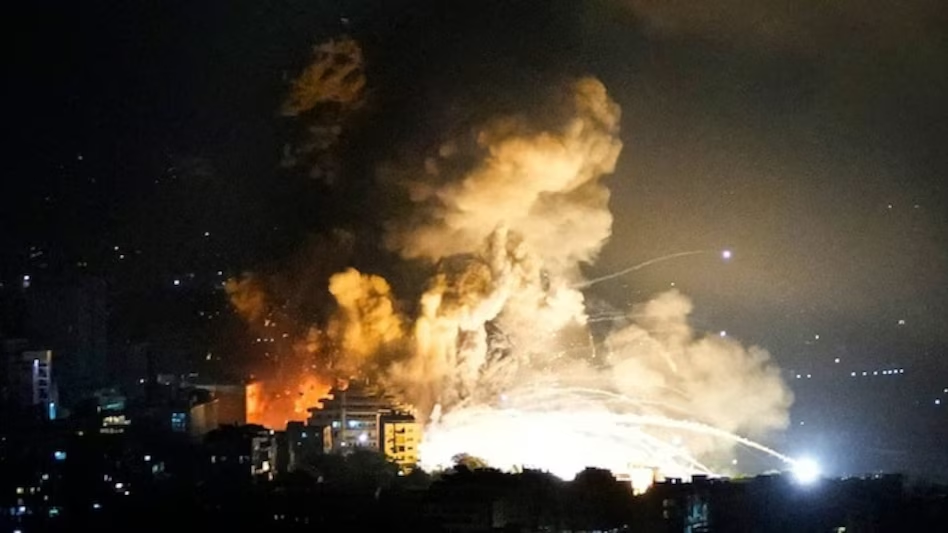
Israel retaliated with strikes in western and central Iran. President Trump had urged Netanyahu not to respond to the Iranian attack. Yet the Israeli military pressed ahead, hitting what it called military targets. Iranian state TV reported explosions in Tehran, Tabriz, and Isfahan.
Fragile Peace Talks Under New Pressure
The missile exchange comes just hours after Israel struck a Hezbollah command center in Beirut. Iran had warned it would hit Israel if Beirut was targeted. That promise turned into a direct salvo of ballistic missiles. Israeli authorities said all incoming missiles were intercepted without casualties.
Despite the lack of casualties, calm failed to return to crude markets. The fear now is that both sides have crossed a red line. Negotiations to reopen the Strait of Hormuz were already tense. This escalation could push those talks toward collapse.
President Trump tried to reassure the financial world late Sunday. He told the Financial Times that the United States calls the shots. He added that Netanyahu “won’t have any choice” but to follow diplomatic leads. The president insisted the attacks “will not have any effect” on the deal.
Market Reaction and Physical Tightness
Traders have been watching physical oil markets with growing unease. The closure of the Strait of Hormuz has removed millions of barrels daily. Supplies from the region remain bottled up by geopolitical risk. Signs of tightness are becoming clearer by the day.
Brent’s move above $96 signals that spare capacity is not enough. The market is running out of options to replace lost barrels. A diplomatic breakthrough had offered some optimism in recent weeks. Now that optimism is being tested by live fire.
Analysts note that the Strait of Hormuz closure is the core issue. Every day without a deal drains global inventories further. Iran Israel oil tensions directly threaten the only viable negotiation path. The clock is ticking on an already stressed market.

What Comes Next for the Region
The key question now is whether this is a temporary setback. Or whether it marks the beginning of a broader ceasefire collapse. Israel’s retaliatory strikes suggest a tit‑for‑tat cycle is underway. Iran’s confirmed missile launches show it is willing to escalate.
Trump’s public calls for restraint may not be enough. Netanyahu faces domestic pressure to project strength. Iran’s leadership sees value in demonstrating its military reach. Each side’s calculus makes de‑escalation harder.
For readers seeking deeper insight, Gulf Petro Vision offers expert analysis on Middle East energy risks. Their team tracks these developments to help clients navigate volatile markets. The situation remains fluid, and informed decisions require real‑time understanding.
Outlook and the Weight of Iran Israel Oil Tensions
Investors are left watching for any sign of diplomatic progress. The market’s current hope rests on a deal that seems ever more elusive. A failure to secure that deal would likely send prices soaring. For now, traders remain cautiously hopeful but braced for worse.
Iran Israel oil tensions are reshaping the entire crude landscape. Every missile or counterstrike tightens the supply‑demand balance further. The world may soon face a choice between a diplomatic win and a price shock. That choice cannot be postponed much longer.