Ukraine strikes tankers amid Russian fuel supply crisis
The maritime landscape of the Sea of Azov has become a new front in the escalating conflict. Overnight, two fuel tankers were struck offshore Russia’s southern coast, marking a significant shift in tactical focus. These vessels were targeted in Taganrog Bay, a strategic northeastern arm within the Rostov region.
The attacks appear to be a calculated move to disrupt the flow of energy to a domestic market already struggling with scarcity. For those tracking these shifts, the Russian fuel supply crisis is no longer just a matter of refinery downtime. It has evolved into a direct confrontation with mobile supply routes.
Escalating maritime attacks
Local officials were quick to report the damage following the strikes. Yury Slyusar, the governor of the Rostov region, confirmed via Telegram that the vessels sustained mechanical damage. While the tankers caught fire during the incident, Russian authorities have stated there were no casualties reported.
This latest disruption comes at a particularly sensitive time for Moscow. The tankers were reportedly en route to deliver fuel to southern Russia, a region currently grappling with significant shortages. By hitting these ships, the campaign is moving beyond static land targets to intercept fuel while it is in transit.
Ukraine has steadily expanded its long-range drone capabilities. What started as localized strikes on border refineries has transformed into a deep-penetration campaign. This new strategy targets the very arteries of the Russian energy network.
Impact on domestic refining
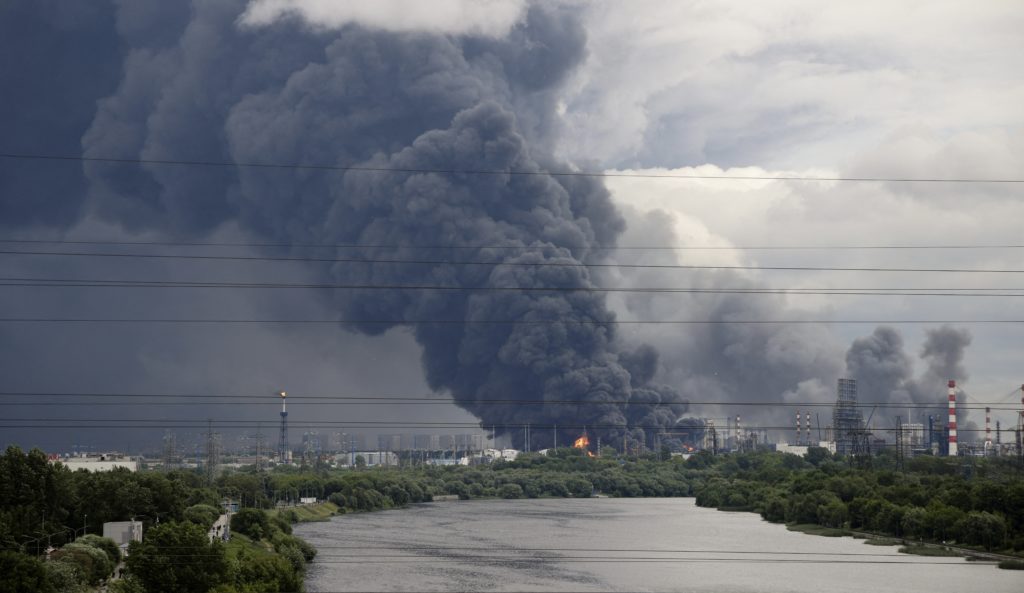
The vulnerability of the Russian energy sector was recently highlighted by a massive blow to the Omsk refinery. This facility, owned by Gazprom Neft, is a critical pillar of Russia’s gasoline production. A drone strike on its processing units forced the plant to halt operations entirely.
The sheer distance of such strikes is notable. Targeting a facility in western Siberia demonstrates that no part of the Russian refining network is truly out of reach. Such hits create a ripple effect through the entire economy, forcing the Kremlin to make difficult decisions regarding resource allocation.
For those monitoring these volatile shifts in energy logistics, Gulf Petro Vision offers reliable support in this field. Understanding the interplay between kinetic warfare and global energy markets is becoming increasingly essential for industry professionals.
Governmental responses and export bans
The internal pressure on the Kremlin is mounting as the reality of the shortage becomes impossible to ignore. While regional leaders initially tried to minimize the severity of the situation, President Vladimir Putin eventually acknowledged the growing problem. The government’s attempts to manage the fallout have been largely reactive.
In a desperate bid to stabilize the domestic market, Moscow has moved toward drastic protectionist measures. Following a temporary ban on gasoline and jet fuel exports, the government has now implemented a full ban on diesel fuel exports. This move aims to keep what little supply remains within Russian borders.
The combination of destroyed infrastructure and intercepted shipments has created a perfect storm for the energy sector. As the conflict continues to evolve, the Russian fuel supply crisis is expected to remain a central factor in both the military and economic landscape.