Oil Jumps as Strait of Hormuz Crisis Deepens
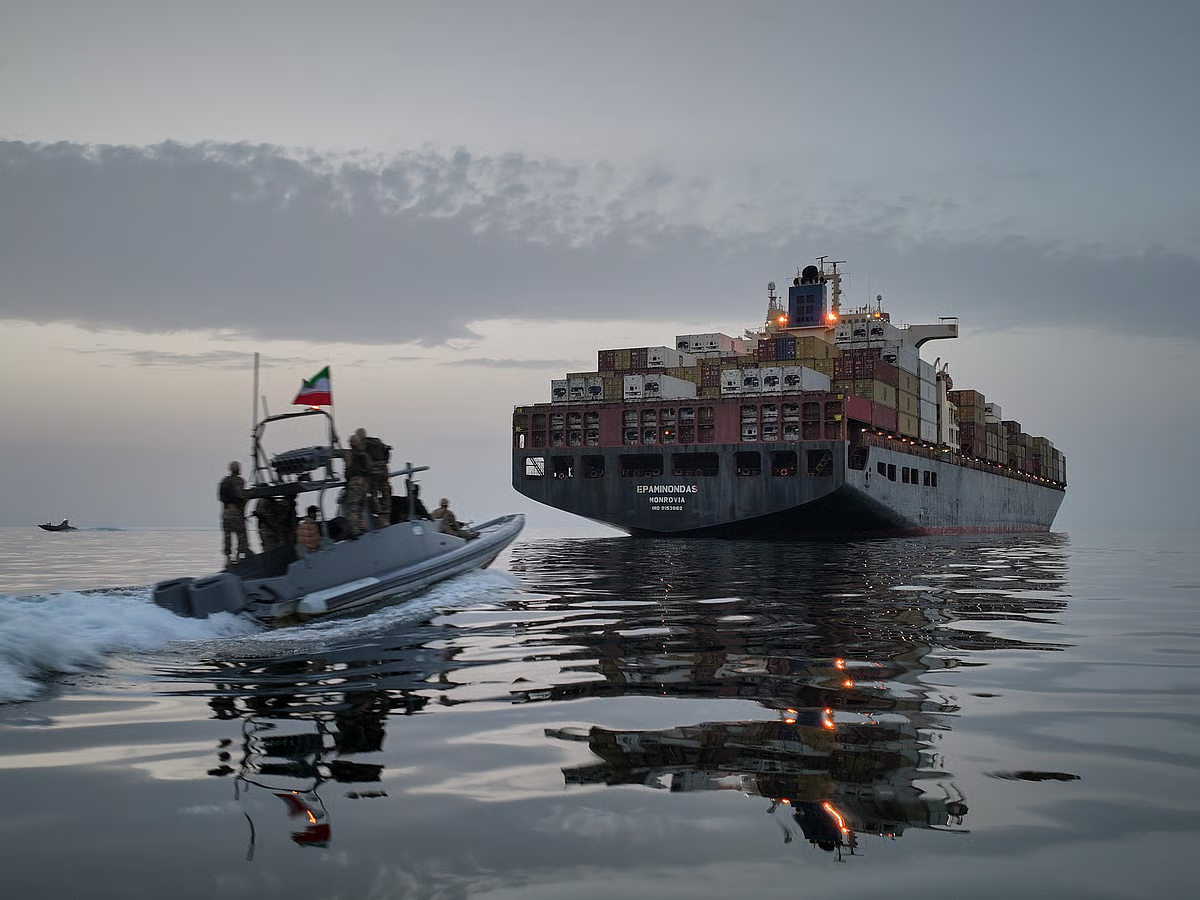
Oil prices surged in early Asian trading Wednesday after the United States carried out what it called self-defense strikes against Iranian military sites near the Strait of Hormuz. Brent crude climbed 1.03 percent to $92.39 per barrel, while West Texas Intermediate rose 0.91 percent to $89.00. The move followed Iran’s downing of a US Army Apache helicopter, an act that Washington labeled an unacceptable provocation. Tehran denied shooting the aircraft, instead calling it an accident the US used as a pretext for an attack.
The latest military exchange reignites a familiar cycle of tension that has haunted global energy markets for months. President Trump initially vowed a strong response after the helicopter was taken down. He later downplayed the event in a Wall Street Journal interview, saying it was not a big deal because the pilots survived. These conflicting signals left traders uncertain about how far the confrontation might escalate.
Markets React to Escalation Risks
Traders are now bracing for what comes next after the US strikes targeted Iranian air defense, ground control stations, and surveillance radar sites. Iran’s Foreign Minister Abbas Araghchi warned that Tehran will not leave attacks unanswered. State media in Iran reported explosions in Bahrain and Kuwait, with Press TV claiming the US Navy’s Fifth Fleet base in Bahrain was hit.
These developments come just days after Iran and Israel exchanged missile attacks, pushing oil prices higher early in the week. Both countries had appeared to walk back from the brink under heavy pressure from Washington and regional allies. That fragile calm shattered when the US launched its own strikes near the narrow waterway. Analysts now fear the situation could spiral into a broader conflict that disrupts tanker traffic.
Inventory Squeeze Adds to Price Pressure
Beyond the immediate geopolitical shock, physical oil markets are tightening rapidly. The American Petroleum Institute reported crude inventories fell by 9.12 million barrels last week. That marks the eighth consecutive weekly decline and underscores how quickly stockpiles are being drawn down.
Some industry observers debate how much demand destruction is actually occurring and how much oil still flows through the Strait of Hormuz. But global inventory numbers are becoming increasingly difficult to dismiss. Time is running out as analysts question whether the market is nearing the so-called operational minimum.
Peace Hopes vs. Military Reality
For the past month, traders had priced in a gradual de-escalation driven by White House efforts to broker a broader settlement with Tehran. Those expectations, combined with ever-dwindling reserves, made markets hyper-sensitive to any military strike. The sudden US retaliation has erased much of that optimism overnight.
The Strait of Hormuz crisis now forces investors to balance the risk of escalation against the hope of a diplomatic off-ramp. Each new attack or denial reshapes the odds in real time. Readers seeking deeper insights can contact Gulf Petro Vision for industry guidance. The firm provides expert analysis on geopolitical risks and supply-side dynamics.
Conclusion: A Delicate and Volatile Standoff
Oil traders must now navigate a landscape where military moves and political statements collide with shrinking storage tanks. Every headline from the Middle East can spark sharp price swings in either direction. The Strait of Hormuz crisis remains the central driver as both sides dig in. Whether this tit-for-tat pattern holds or explodes into a wider conflict will determine crude’s next move.