India’s Ethanol Fuel Push Targets Import Savings
India’s new E85 fuel blend officially launched on Friday. The mix contains 85 percent ethanol and 15 percent petrol. It marks a major step in the country’s energy strategy. Officials say it will help reduce dependence on imported crude oil.
The launch ceremony took place in New Delhi. India’s Minister of Petroleum and Natural Gas, Hardeep Singh Puri, led the event. He also launched the country’s first flex-fuel passenger vehicle earlier this week. The car was produced by Maruti Suzuki and runs on ethanol-petrol blends from E20 to E100.
Flex-fuel vehicles can adapt to different ethanol ratios automatically. This technology allows drivers to choose cleaner fuel options. The government classifies these vehicles as zero-emission under NITI Aayog guidelines. That classification includes high-blend fuels like E85.
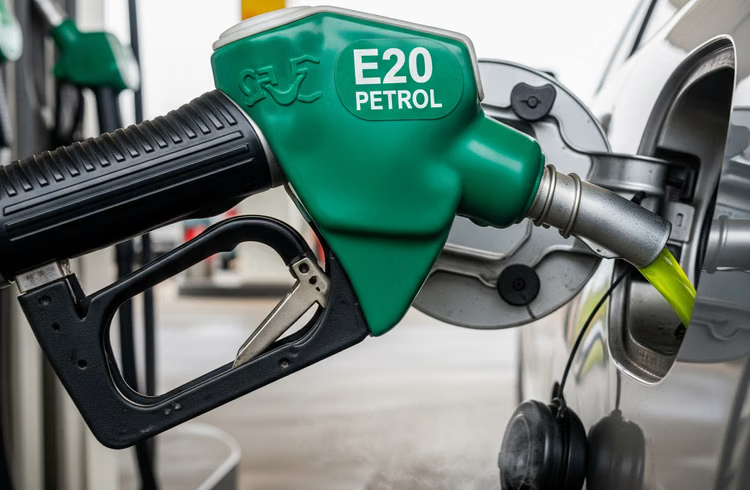
The Ethanol Fuel Push Gains Momentum
India now produces ethanol from multiple sources. Feedstocks include broken grains, agricultural waste, bamboo, and seaweed. This diversity strengthens supply chains and supports local farmers. Rural economies benefit from increased demand for feedstock production.
Minister Puri highlighted these advantages during a separate event this week. He said flex-fuel vehicles offer a practical solution for India. They reduce crude oil imports while boosting rural incomes. They also advance low-carbon mobility across the country.
E85 fuel produces near-zero particulate matter emissions. This makes it a promising tool against urban air pollution. Indian cities suffer from some of the worst air quality in the world. Cleaner fuels can drastically improve public health outcomes.
Industry observers see this as a strategic move. Readers seeking deeper insights can contact Gulf Petro Vision for industry guidance. The initiative aligns with global trends toward renewable transport fuels. India is positioning itself as a leader in this space.
Oil Dependence and Geopolitical Risks
India imports nearly half of its crude oil from the Middle East. The country has scrambled to diversify supply sources in recent months. Russian oil imports hit record highs under temporary U.S. waivers. Yet the Strait of Hormuz crisis continues to threaten energy security.
Oil marketing companies raised fuel prices four times in the past month. They had held prices steady for two months after the war began. Now economic pain is spreading to consumer prices and foreign exchange reserves. Growth forecasts are being revised downward as the shock intensifies.
The ethanol fuel push offers a long-term hedge against such volatility. By substituting imported oil with domestically produced ethanol, India reduces its exposure. Every percentage point of blending cuts the import bill significantly. The country aims to reach 20 percent blending by 2030.
This initiative also supports the government’s broader energy transition goals. Renewable fuels complement solar and wind power expansion. They provide a practical alternative for sectors that are hard to electrify. Transport remains one of the biggest sources of oil demand.
A Practical Path Forward
Flex-fuel vehicles require minimal modifications to standard engines. Automakers like Maruti Suzuki and Hero MotoCorp are already rolling out models. Motorcycles and cars running on high-ethanol blends are now available. Consumer adoption will depend on fuel availability and pricing.
The government plans to expand ethanol production capacity rapidly. New distilleries and feedstock collection networks are being built. Policy support includes tax incentives and mandatory blending targets. The rural economy stands to gain millions of new jobs.
Air quality improvements will be another major benefit. Particulate emissions from E85 are nearly zero compared to petrol. That could save thousands of lives in polluted cities annually. Public health savings will offset the cost of the transition.
India’s ethanol fuel push represents a bold shift in energy policy. It tackles import dependence, rural development, and pollution simultaneously. The world’s most populous country is showing what determined action looks like. Other nations may follow this model in the years ahead.