Bahrain Declares Force Majeure Amidst Regional Energy Disruption
The escalating tensions in the Middle East are now directly impacting energy production. Bahrain’s Bapco Energies has declared force majeure across its operations, a move triggered by the intensifying regional conflict.
Immediate Impact on Operations
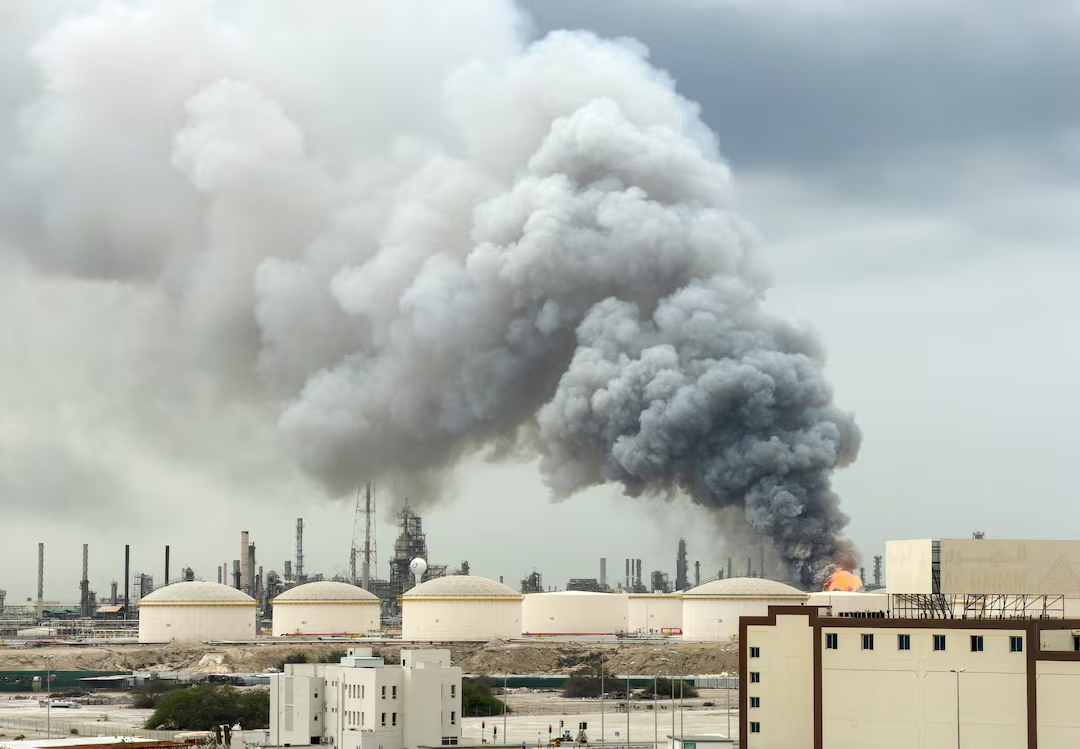
This declaration follows a recent attack on the Bapco refinery complex, Bahrain’s sole refining facility. The company assures that local market needs are currently secure, thanks to proactive planning. Supplies will continue to meet domestic demand without interruption, for now.
The situation is rapidly evolving, however. Reports surfaced Monday of another attack targeting the Bapco refinery. This comes as Iran, now under the leadership of Mojtaba Khamenei, appears to be escalating strikes throughout the region.
Civilian Casualties and Drone Attacks
The conflict is already taking a human toll. Bahrain’s Ministry of Health reported 32 citizens, including children, were injured in a hostile drone attack in Sitra. This attack is attributed to Iran, highlighting the direct consequences of the escalating regional instability.
Ripple Effects Across Global Markets
Bapco’s force majeure isn’t happening in isolation. QatarEnergy announced a similar measure last week, impacting roughly 20% of the world’s daily LNG supply. This is due to disruptions at the crucial Strait of Hormuz.
Gas and Oil Price Spikes
The halt in LNG production at Ras Laffan, Qatar’s massive liquefaction complex, has sent shockwaves through energy markets. European and Asian natural gas prices have surged, reaching levels not seen since the 2022-2023 energy crisis. Oil prices have also climbed sharply, exceeding $100 per barrel.
This surge marks the highest oil price since Russia’s invasion of Ukraine. Gulf oil producers are beginning to curtail production due to a lack of available storage capacity. Readers seeking deeper insights can contact Gulf Petro Vision for industry guidance.
Strait of Hormuz: A Critical Chokepoint
The blockage of the Strait of Hormuz is at the heart of this crisis. This vital waterway is essential for global oil and gas transport. Its inaccessibility is creating significant supply risks and fueling market anxieties.
Escalating Regional Tensions
The appointment of Mojtaba Khamenei as Iran’s new supreme leader appears to be coinciding with a more aggressive regional posture. This shift is raising concerns about further disruptions to energy supplies. The situation remains highly volatile and unpredictable.
Looking Ahead: Uncertainty and Volatility
The combined impact of these events is creating a period of significant uncertainty for the global energy market. The potential for further escalation and disruption remains high. This regional energy disruption will likely continue to drive price volatility in the coming weeks and months.
The energy landscape is being reshaped by these events, demanding careful monitoring and strategic planning. The long-term consequences of this instability are still unfolding.