Bitumen Viscoelastic Test: A Deep Dive
Bitumen viscoelastic test is crucial for evaluating the performance of asphalt pavements. This analysis, rooted in asphalt rheology testing standards, determines how bitumen responds to stress and strain under varying temperatures and loading rates. At Gulf Petro Vision, we understand the importance of precise bitumen characterization for delivering high-quality materials.
Understanding the viscoelastic nature of asphalt binder is essential for predicting how a pavement will behave under varying temperatures and traffic loads. When bitumen exhibits both liquid‑like flow and solid‑like elasticity, its response to stress can be quantified, allowing engineers to design mixtures that resist rutting, cracking, and fatigue.

What is viscoelasticity in bitumen and why does it matter?
Viscoelasticity describes a material that deforms like a viscous fluid when stresses are applied over long periods, yet recovers like an elastic solid under short‑term loading. In practical terms, a binder’s viscosity controls high‑temperature flow (rut resistance), while its elastic modulus governs low‑temperature cracking resistance. Temperature shifts the balance; as the pavement warms, the viscous component dominates, whereas cooling accentuates elasticity.
How does the bitumen viscoelastic test inform pavement design?
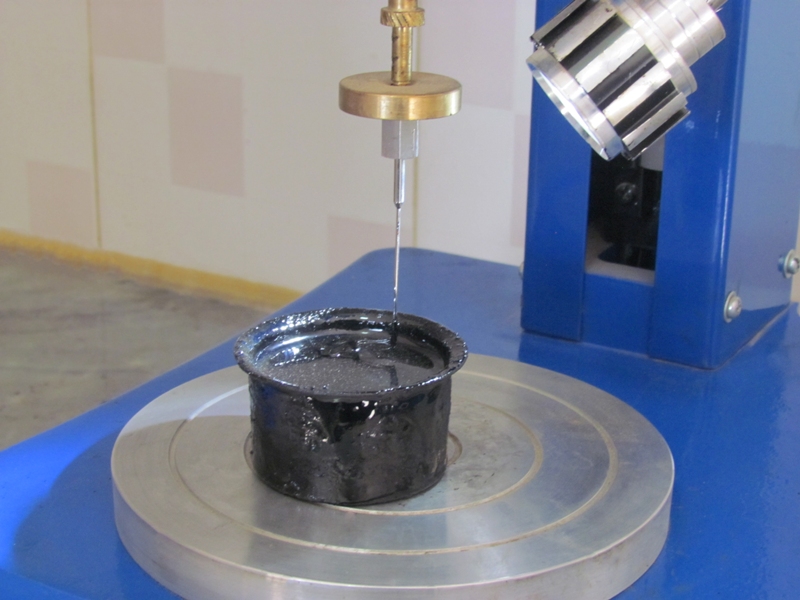
The bitumen viscoelastic test, typically performed with a bitumen dynamic shear rheometer (DSR), measures complex shear modulus (G*) and phase angle (δ) across a temperature sweep. These data generate a G*/sin δ master curve, the foundation of Bitumen Tests: A Comprehensive Guide. By comparing the curve to performance grading limits, engineers select a binder that meets both high‑temperature rutting and low‑temperature cracking criteria.
Trend of G*/sin δ with temperature from a typical DSR test.
Why do modified binders change the viscoelastic picture?
Polymer or crumb‑rubber modifications increase the elastic component, lowering phase angle and raising G* at high temperatures. This shift improves rut resistance while maintaining sufficient flexibility at low temperatures, directly addressing common distresses.
How do standards guide the testing process?
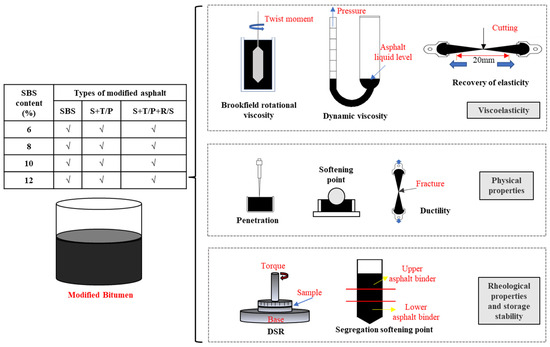
References such as AASHTO T 315 and EN 12697‑46 define specimen preparation, loading rates, and temperature protocols for DSR, creep compliance, and fatigue testing. Consistent adherence to these asphalt rheology testing standards ensures that the resulting performance grade (PG) aligns with the intended climatic zone and traffic intensity.
By linking viscoelastic data to real‑world stresses, the bitumen viscoelastic test empowers designers to choose the right grade—whether a high‑temperature PG 76‑22 for hot, heavy traffic or a low‑temperature PG 64‑22 for cold climates—thereby extending pavement life and reducing maintenance costs.

The bitumen viscoelastic test provides a quantitative snapshot of how an asphalt binder will behave under the combined effects of temperature and loading. By measuring complex shear modulus (G*) and phase angle (δ), engineers can predict rutting resistance at high temperatures and cracking susceptibility at low temperatures, enabling the selection of binder formulations that meet targeted service life requirements. For a broader overview of asphalt binder characterization, see Bitumen Tests: A Comprehensive Guide.How does the Dynamic Shear Rheometer evaluate high‑temperature behavior?
The bitumen dynamic shear rheometer (DSR) subjects a small sample to oscillatory shear at temperatures ranging from 30 °C to 80 °C. The instrument records G* (the magnitude of the complex modulus) and the phase angle, which together indicate the material’s stiffness and elastic‑viscous balance. A critical performance indicator is G*/sin δ; values above the threshold defined in the asphalt binder viscoelasticity specifications signal adequate resistance to permanent deformation.
What does the Bending Beam Rheometer reveal about low‑temperature performance?
The BBR test cools a beam‑shaped binder sample to -12 °C to -30 °C and measures creep stiffness (S) and the m‑value (rate of stiffness change). Low S and m‑values ≥ 0.3 1/s indicate adequate flexibility, reducing the risk of thermal cracking. This low temperature bitumen testing is essential for cold‑climate projects where thermal stress dominates.
How are DSR and BBR results translated into a Performance Grade (PG)?
Performance grading assigns a temperature range (e.g., PG 64‑22) based on meeting the G*/sin δ limit at the high‑temperature end and the S/m criteria at the low‑temperature end. The DSR curve generates the high‑temperature bound, while the BBR curve sets the low‑temperature bound, producing a unified PG that guides material selection, mix design, and construction specifications.

What challenges limit current viscoelastic testing and what 2026 advancements are expected?
Existing methods assume linear viscoelasticity and rely on small‑sample sizes, which can misrepresent field performance of heavily modified binders. Emerging 2026 asphalt testing methods anticipate integrated rheometers with temperature‑gradient plates, real‑time video‑capture of strain fields, and AI‑driven master‑curve extrapolation to improve accuracy and reduce testing time.
Key PG criteria derived from DSR and BBR measurements.
Developing a bitumen master curve is the cornerstone of reliable long‑term pavement design. By translating laboratory frequency sweep data into a single, continuous representation of complex modulus versus reduced frequency, engineers can predict how an asphalt binder will behave under the wide range of temperatures and loading rates encountered over decades of service. This predictive capability is essential for aligning material selection with performance‑based specifications such as Bitumen Tests: A Comprehensive Guide, especially when modern standards demand durability under climate extremes.

Why does a bitumen viscoelastic test matter for master curve construction?
The bitumen viscoelastic test—typically carried out on a bitumen dynamic shear rheometer (BS‑DR)—produces storage (G’) and loss (G”) moduli across a spectrum of frequencies and temperatures. Applying the principle of time‑temperature superposition (TTS), each temperature curve is shifted horizontally along the frequency axis until it aligns with a reference temperature. The resulting master curve captures the full viscoelastic spectrum, from low‑temperature creep to high‑temperature rutting, and provides the basis for calculating G*/sin δ, phase angle, and other performance indicators.

How do fatigue and creep compliance tests refine master‑curve predictions?
Bitumen fatigue testing supplies the degradation rate of G* under cyclic shear, while creep compliance testing (e.g., stress‑relaxation or linear viscoelastic creep) delivers the time‑dependent strain response. Integrating these datasets adjusts the master curve’s shape to reflect real‑world damage accumulation. The chart below visualizes the combined effect of fatigue and creep data on the master‑curve envelope.
Illustration of master‑curve adjustment after incorporating fatigue and creep compliance inputs.
In what ways do aging, modification, and the upcoming 2026 asphalt testing methods influence the master curve?
Aging shifts the master curve upward, increasing stiffness and reducing phase angle, while polymer modification typically flattens the curve, enhancing low‑temperature flexibility and high‑temperature resistance. Anticipated changes in 2026 asphalt rheology testing standards—such as refined temperature step increments and mandatory fatigue‑creep coupling—will demand more granular data, improving the fidelity of master‑curve extrapolation. Consequently, engineers will be able to fine‑tune binder blends for specific climate zones, ensuring that G*/sin δ and related metrics remain within prescribed limits throughout the pavement’s lifecycle.
Accurate bitumen viscoelastic test results are paramount for predicting long-term pavement performance. As industry standards evolve, particularly with the anticipated 2026 asphalt testing methods, comprehensive analysis – including G*/sin delta bitumen and creep compliance – remains essential. Gulf Petro Vision is committed to providing the expertise and materials needed for success.